

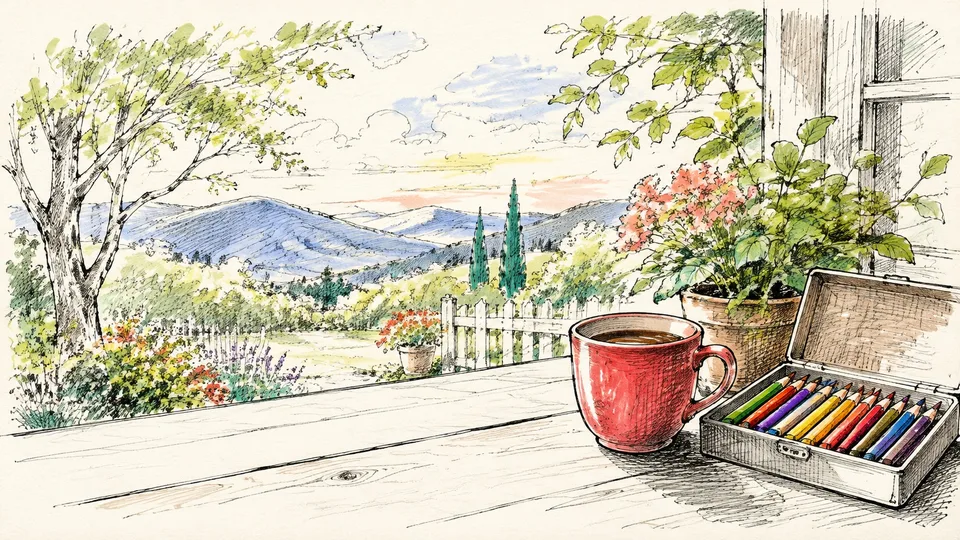
Colour can be a doorway into attention. A red cup on a windowsill, a green field after rain, or a blue shadow on the kitchen floor can change the way we enter an ordinary hour. We may notice the shade first, then discover the feeling that was waiting behind it.
These poems about colour move through home, weather, gardens, paper, and the turning year. The collection includes two sonnets, a haiku, free verse, and a ballad. Each poem treats colour as more than decoration. It becomes a way to remember, welcome, pause, or look again.
I have always liked the moment when a familiar place surprises me. A wall catches late light, a scarf looks different beside a coat, or a row of trees gathers several greens at once. Those small discoveries remind me that attention is not a finished skill. We can keep learning how to see.
If you are writing for a child, a classroom, an artist, or someone who loves the natural world, choose the image that feels most like your reader. These poems about shapes offer another way to notice the world, while these poems about sunflowers stay with one bright part of the garden. I hope the poems below add a little colour to your next page.
Poems About Colour in Weather and Memory
Rain on the Tin Roof
The haiku begins with colour after rain because wet surfaces often make familiar shades look newly polished. I like the last line’s slow change from blue hills to gold, which feels like a whole afternoon passing in three short breaths. It may work well as a tiny classroom reading or a note beside a landscape painting.
Haiku
Rain on red tin roof
Green leaves hold the morning light
Blue hills fade to gold
A Box of Crayons
This sonnet follows separate colours into a larger question about seeing. I notice the turn where names stop being enough, because a colour can carry a memory that no chart can explain. The poem may help a reader who wants to celebrate imagination without making the world sound too tidy.
Shakespearean sonnet
The red one waits beside the window frame,
A yellow line wakes up the page with light,
Blue gathers rain and gives the clouds a name,
Green turns the quiet garden bright.
The orange cup holds pencils by the door,
A violet shadow settles on the wall,
The brown earth keeps the seeds it held before,
While silver evening climbs the hall.
We learn the world by naming what we see,
Then find that names can never hold it all,
A colour may be memory, leaf, or sea,
A spark of dawn, a ribbon, or a call.
So let the changing spectrum lead you through,
The ordinary made both strange and new.
The Red Thread
The free verse poem uses one red thread to travel through several kinds of attention. I like that it moves from a sewing basket to a sunset without explaining the connection too much. This may help someone who wants a short poem about colour that feels personal but leaves space for the reader’s own memory.
Free verse
A red thread slips from the sewing basket.
It crosses the table,
catches on a button,
waits beside the open window.Outside, the setting sun
finds the same bright note
on the far rim of the hill.I follow it with my eyes
until the room grows dim,
then tie it gently
around the page.
After the First Frost
The second sonnet looks at colour as a seasonal language. I love the way the poem lets green grow brave against the cold, because change can be visible before we are ready to name it. A reader might choose this one for an autumn note or for anyone learning to welcome a different season.
Shakespearean sonnet
When autumn lays its copper on the tree,
The field receives a quieter gold,
I feel the summer loosen quietly,
And watch the green grow brave against the cold.
A blue cup waits beside the kitchen sink,
Pink clouds are brushed above the rim of town,
The day grows soft before I stop to think,
And evening folds its lavender down.
No shade remains exactly what it was,
The eye keeps learning through the changing air,
A colour can become a question because
It asks us to be present, still, and care.
I name the hues, then let them wander free,
To make a wider world of what I see.
The Painter of the Porch
The ballad gives colour a human rhythm through a porch being renewed one board at a time. I like the way each coat changes the house without erasing its age. This poem may be useful when you want to celebrate a small act of making a place brighter.
Ballad
The painter brought a ladder when the morning sky was clear,
A brush, a tin, a worn blue shirt, and quiet patience near.
The porch had held a hundred rains, its boards were pale and dry,
But every board remembered light beneath the open sky.He chose a green that leaned toward spring, a colour soft and true,
It made the old red door look glad and let the shadows through.
By afternoon the steps seemed new, though every nail stayed long,
And someone on the sidewalk stopped to hum a little song.The paint will weather, seasons turn, the porch will gather rain,
Yet colour gives a home a voice that welcomes us again.
A brush can change a tired day with one unhurried start,
And leave a brighter square of light inside the patient heart.
Seeing More Than We Saw Before
Colour gives a reader an easy place to begin noticing. You do not need an art vocabulary or a perfect description. You can name the shade that appears beside the sink, in the sky, on a child’s drawing, or in the coat someone wears on a cold morning.
You can also let colour hold more than one feeling. Yellow may be cheerful in one memory and lonely in another. Blue may belong to a river, a favorite shirt, or an hour when a person needed quiet. Poems become more honest when they allow those meanings to change.
If you are using one of these poems in a classroom or card, invite the reader to add one colour from a real place. That small detail can turn a general verse into a shared observation. A poem about colour works best when it sends the eye back into the world.
These poems about the sky may carry your attention outdoors, where light keeps changing the same landscape. You might also keep a simple colour list for a week and see which shades return. The list itself may become a poem.
I hope this collection helps you look at a familiar day with fresh eyes. There is always another shade waiting at the edge of the picture, asking us to slow down and see it.
Useful supplies for a week of noticing colour
Keep the colour list on paper you already have. A pen is enough, and existing crayons or pencils can add small swatches beside the words.
These are paid links. As an Amazon Associate I earn from qualifying purchases.
- View on Amazon
Prismacolor Premier Colored Pencils
Add a small color swatch beside each shade in the week of observations suggested in the article.
One set of 24 soft core colored pencils
Send a little poetry to someone you love.