
Looking for I'm sorry poems for your wife can mean sitting with a blank card and knowing that affection alone will not answer what happened. You may know exactly what you regret, yet struggle to say it without slipping into explanations. A useful poem should help you speak plainly, not hide the apology beneath something pretty.
These five poems approach that moment through ordinary things: a cooling cup of tea, a gate left unrepaired, a phone turned face down, and a calendar square that held a shared plan. There are two sonnets and three quieter readings, each with a different way of taking responsibility. None assumes that forgiveness must arrive before the last line.
I am especially drawn to an apology that leaves room for the other person to speak. The smallest detail can reveal whether that room is really there. A hand moving away from a phone may mean more than another sentence about how much someone is loved, particularly when attention was what went missing.
You might copy a whole poem into a note, read one aloud if your wife welcomes the conversation, or use a few lines to find your own beginning. Choose the situation that genuinely fits. Then name what you did in your own words, without asking the poem to carry a truth you have not yet been willing to say.
Five I'm Sorry Poems for Your Wife
Before Your Sentence Ended
The spoon turning toward the wall catches my attention because it gives the disagreement a small, visible pause. I value the speaker noticing that pause without claiming to know everything his wife feels, then admitting that he took more than his share of the conversation.
Your sentence had not reached its final word
Before I raised my voice to make my case.
I cared for being right, not what I heard
And left you less than half our common space.The spoon lay still beside your cooling tea.
I watched you turn its handle toward the wall.
There was no lack of words to shelter me;
There was a lack of care beneath them all.I'm sorry that I hurried past your thought.
I will not call my haste a busy day.
Your words deserve the time that mine have sought.
I'll let you end what you began to say.I cannot change the words I said to you
But I can change the things I choose to do.
The Phone Beside the Bread
I like the kettle clicking without becoming another excuse to leave the table. That ordinary sound makes the speaker's decision to stay and listen feel deliberate, which may matter when an apology needs attention more than ceremony.
I put my phone face down beside the bread.
The window holds a square of evening light.
You start to tell me where I lost your trust.
I feel the quick defense begin to rise.
I let it pass without becoming speech.The kettle clicks; I leave it where it stands.
There is no need to fetch another cup.
You have the floor. I will not take it back.
I'm sorry that I made you work so hard
To tell me what I should have stopped to hear.
No Quick Reply
The cooling cup returns here, but what stays with me is the refusal to put a clock on the conversation. I appreciate the repeated promise to listen because it keeps bringing the speaker back from the temptation to explain everything away.
I will not ask you for a quick reply.
You need not make this easier today.
My love must learn to listen, not deny.Your cup stands cooling as the hours go by.
A softer voice cannot erase the day.
I will not ask you for a quick reply.I will not dress excuses up to try
To turn the things I did the other way.
My love must learn to listen, not deny.You need not spare my feelings with a sigh
Or set your own unanswered thoughts away.
I will not ask you for a quick reply.The words I spoke are mine; I won't deny
The choice I made, whatever else I say.
My love must learn to listen, not deny.I'll put the practiced answers gently by
And hear the parts I hurried past today.
I will not ask you for a quick reply.
My love must learn to listen, not deny.
The Gate I Said I'd Mend
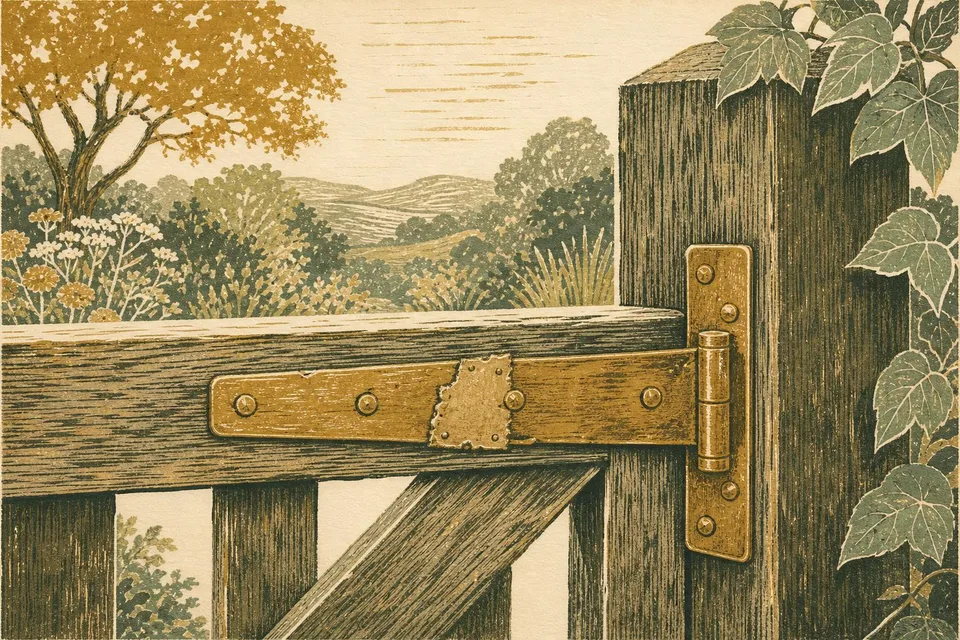
A loose hinge can seem too small to belong in an apology until someone has had to lift that gate again and again. What I like here is the recognition that remembering, asking, and waiting are work too, and that finishing one task does not settle the whole matter.
I said that I would mend the garden gate
Then left the loose hinge swinging in the rain.
You asked me twice; I made the small job wait
And let my promise ask your trust again.It was not just the wood against the stone
Nor just the latch that would not settle right.
It was the work I left for you alone
The weight you carried past the porch at night.I'm sorry for the task I left undone
And for the thought that asking was your share.
I'll keep my word before the day is done
Then keep it when no praise is waiting there.A mended gate cannot undo the past;
I'll work to make my next assurance last.
The Square on the Calendar
The penciled circle matters to me because a shared plan can begin long before the day itself. I find the final blank square more honest than an elaborate replacement surprise, since the speaker leaves the choice of another time with his wife.
You had circled Saturday
lightly, in pencil
leaving room for the name
of somewhere we might go.I filled the morning
with things I had not told you about
then called our plan
something we could do another time.I'm sorry.
You had already made time.
I treated it
as though it belonged only to me.I will not arrive
with a grand replacement
and expect you to be pleased.There is another empty square.
If you want to choose it together
I will bring my calendar
and leave the pencil with you.
Let the Apology Continue Beyond the Page
The objects in these poems remain ordinary after the apology. The tea may need warming, the gate still needs its hinge repaired, and the calendar cannot give back a missed afternoon. I find something honest in that. Words can acknowledge what happened without pretending to remove every consequence of it.
If you are choosing a poem to share, begin with accuracy rather than elegance. The gate poem belongs with an unkept promise, while the first sonnet speaks more directly to interrupting or insisting on being right. If none of the situations fits, borrow the plainness of the apology rather than the details. Your wife should be able to recognize the truth of what you mean.
A brief personal sentence before or after the poem can make the note more useful. Say what you are sorry for, acknowledge what it asked of her, and name a change you can actually make. Avoid attaching a request for reassurance. She may want to talk, she may need time, or she may simply want you to follow through.
I keep returning to the phone placed beside the bread. It is not a grand gesture, and that is why I like it. The speaker has stopped reaching for something else while his wife is speaking. A poem can help someone arrive at that table, but the listening happens after the page is set down. Let the next ordinary moment receive the same care as the words you chose.
For another collection, visit Poems About Forgiveness: Making Room Without Erasing the Past or Trust Poems for Lovers: Words for a Steady Relationship.
Send a little poetry to someone you love.