
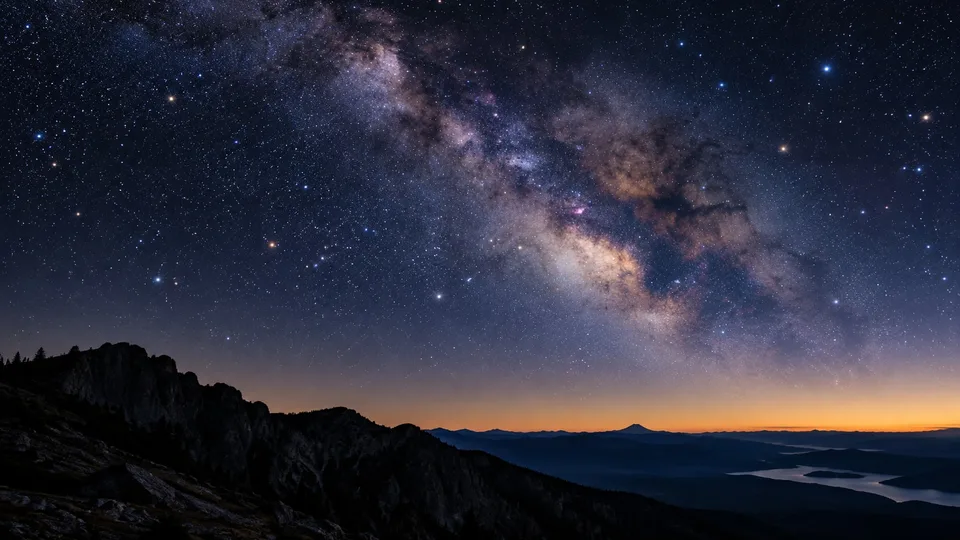
Some nights, looking up is enough to interrupt the argument we have been having with the day. A few lights appear above the roof, and the familiar street suddenly belongs to a much larger scene. The unfinished tasks are still there. So is somewhere else for the eye to rest.
These seven original poems about stars move between that private pause and the pleasure of sharing a sky. There is a borrowed telescope, a porch step, a little point of light, and a wish sent toward someone far away. The poems are imaginative reflections rather than a guide to identifying stars. You do not need to know the names of the lights to enjoy the looking.
I find the human scale of stargazing especially moving. We come outside in ordinary shoes, bringing a cup, a question, or a person we want to stand beside. Then we tip our faces toward something our daily hurry cannot arrange. The contrast gives a poem room to breathe.
For another familiar presence after dark, these poems about the moon offer a separate collection. Here, the smaller scattered lights lead the attention. Read one poem slowly, leave a little quiet afterward, and imagine the place from which you would most like to look up tonight.
Seven Poems about Stars
The Window After Everyone Has Gone
The room in this poem has not stopped being ordinary. I like the way the window can change its scale without asking the person inside to solve anything first.
When all the cups are rinsed and put away,
The window gives the room another view.
A scatter in the dark beyond the day
Has made the common garden strange and new.I turn the little lamp beside the chair;
Its circle falls across an open book.
The sky keeps other circles in the air,
Beyond the small arrangements of my look.I have no need to name each point of light,
Or make the distant answer what I ask.
It is enough to stand a while tonight,
Released from being useful to a task.The room is still the room I knew before;
The dark has opened up another door.
One Point of Light
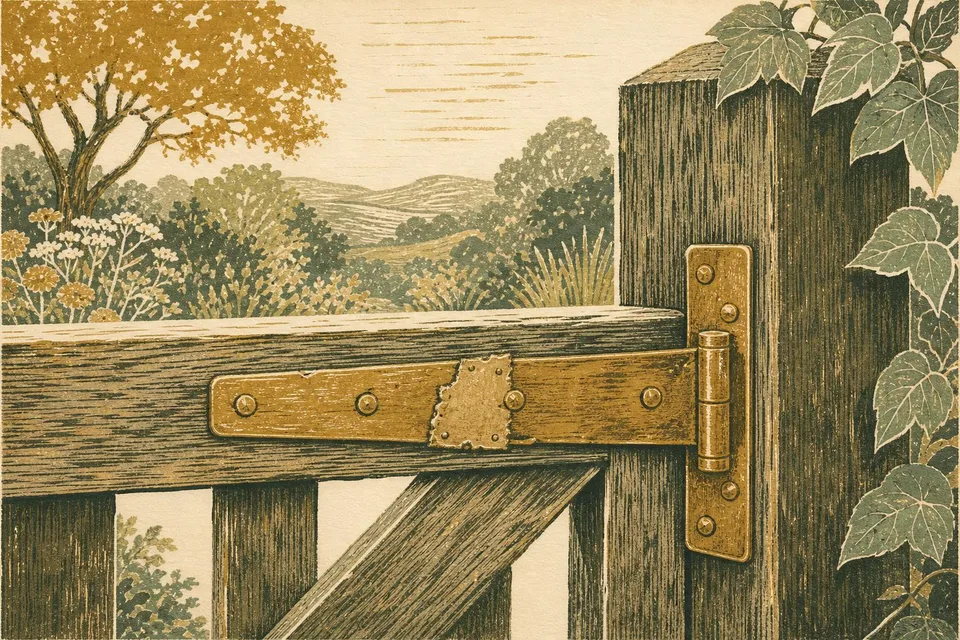
A single light can be enough for the eye to settle on. I enjoy the familiar fence keeping this little moment close to home.
One star past the fence.
I stop with the gate half closed.
Night has room for this.
The Borrowed Telescope
The borrowed instrument brings the neighbors together before it shows them anything clearly. I like a story where the shared mistake becomes part of the pleasure rather than a failure.
We carried out the borrowed scope
And set it on the lawn.
We pointed where the stars looked bright;
The picture soon was gone.We found a branch, a roof, a wire,
Then something bright at last.
The child said, "Let me see it too,"
And took a turn as fast.We did not learn a hundred names
Or map the whole night through.
We learned how good a little dark
Could be with more than two.
Under the Same Wide Dark
A message across distance can ask for a shared moment instead of a long conversation. I am drawn to the quiet companionship of two people looking from places the poem does not need to name.
If you are near a window, look outside;
I will be standing somewhere near my door.
The day has kept our busy worlds quite wide;
The night brings back a closeness felt before.We need not see the same small patch of sky,
Or find the lights in quite the selfsame place.
The thought that you have paused as well as I
Can give the miles a more familiar face.I cannot bring a chair across the sea,
Or pass a cup between your hand and mine.
But I can hold your presence here with me,
This little time beyond the moving line.Wherever darkness finds us standing still,
I wish you light upon your window sill.
No Constellation Required
Not knowing a name need not become a reason to look away. I like the child's confident description because it gives the sky a place in an actual conversation.
"That one," you say,
"beside the one that looks less bright."It is not a name
a chart would recognize.But I know where you are pointing.
For this moment,
we have found enough language
to look together.
The Porch Step
The small physical details keep this quiet reading from floating away into a large idea. I appreciate the ordinary cold step and the decision to stay for one more breath.
The stone beneath my feet has kept the cold.
I draw the woolen sleeve across my wrist.
A car goes slowly past the darkened hedge.
Its passing leaves the garden still again.
Above the roof a little light appears.
I wait until my looking finds the rest.
The latch is near, the warm room waits behind.
I take another breath before I turn.
Enough Night for Both of Us
The returning lines feel to me like two people finding the same thought again. I wanted the widening space to welcome company without taking away the solitude.
The smallest light can teach the eye to see.
We leave the crowded questions of the day.
The night is wide enough for you and me.A branch has made a pattern like a tree
Against the lights that seem so far away.
The smallest light can teach the eye to see.We need not turn the dark into a key
That opens every answer on the way.
The night is wide enough for you and me.A little time can loosen what must be;
The hours need not be measured by their pay.
The smallest light can teach the eye to see.I hear your breath; the wind has passed the tree.
There is no perfect sentence left to say.
The night is wide enough for you and me.The door is close; we have no need to flee.
We let another minute softly stay.
The smallest light can teach the eye to see.
The night is wide enough for you and me.
Let the Quiet Stay a Little Longer
A night sky poem can be read indoors as easily as outside. What matters is the pace you give it. Try letting the final image settle before moving on to another reading. The pause may hold something different from the words: a remembered porch, a person you miss, or the simple pleasure of having looked away from a screen for a moment.
If you share a poem, ask what place it brought to mind. Some readers will picture a dark country road; others a single light seen between buildings. Neither view needs to be grander than the other. A small opening in an ordinary evening can hold enough sky for a meaningful memory.
The telescope story also leaves room for humor. A shared attempt does not have to become an accomplishment. You can remember the branch in the lens, the borrowed coat, or the person who kept asking for another turn. Those human details are often what make the distant lights feel close.
These poems about the sky continue into clouds, weather, and daylight. For tonight, I would keep the invitation small. Find one point of light in your imagination or beyond a window. Let it be something you notice without needing to own, explain, or turn immediately into a lesson. There is a generous kind of attention in simply staying to look.
For looking up on a clear night
Nothing here is needed to enjoy these poems. If you want to know what you are looking at, these can help.
These are paid links. As an Amazon Associate I earn from qualifying purchases.
- View on Amazon
National Geographic Backyard Guide to the Night Sky
Use this guide to find the constellations on a clear night.
One book
- View on Amazon
Celestron Cometron 7x50 Astronomy Binoculars
A pair of astronomy binoculars brings many more stars into view.
One pair of binoculars
Send a little poetry to someone you love.