

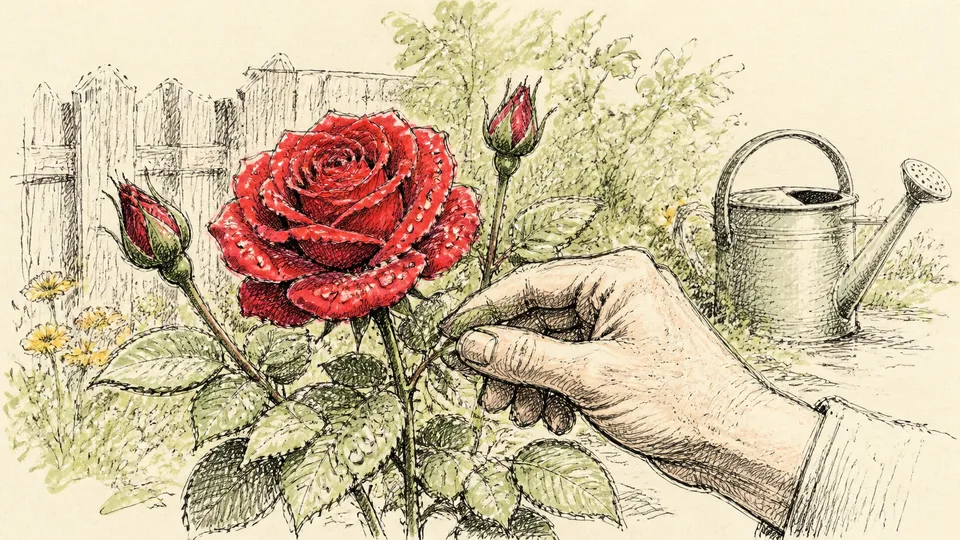
Red roses arrive carrying many meanings before we say a word. They can mark affection, courage, celebration, remembrance, or a simple wish to brighten a room. Yet the flower itself is more interesting than any single symbol. A rose is soft and sturdy at once, shaped by weather, patient roots, and the hands that keep returning to the garden.
These poems about red roses look beyond the perfect bouquet. The collection includes two sonnets, a villanelle, a haiku, and blank verse. Some poems linger over rain on petals, while others notice pruning, waiting, and the imperfect stem that still offers a beautiful bloom.
I like a garden flower best when it still bears some evidence of the garden. A curled leaf, a drop of water, or a little soil near the cut stem reminds us that beauty was grown rather than simply arranged. That history makes a rose feel personal, especially when it comes from someone’s own yard.
Its small imperfections make the gift warmer.
For a wider walk through petals and seasons, visit these poems about flowers. The poems about nature place the garden within the larger weather and landscape that help every living thing grow.
Five Red Rose Poems for Giving or Keeping
The Rose After Rain
This sonnet watches a red rose after a summer shower. Its beauty comes not from looking untouched, but from meeting the weather and standing open afterward.
Sonnet
The rain has left its beads on every red,
Each petal cups a little silver sky;
The storm bent low the rose’s lifted head,
Yet morning finds the blossom standing high.
A torn green leaf rests near the garden wall,
Dark soil is pressed where heavy water ran;
The flower does not hide what had to fall,
It opens as completely as it can.
I touch no drop, but let the sunlight find,
The tender weight each curved red surface bears;
Such beauty keeps the memory of wind,
And offers fragrance through its recent cares.
The rose is brave because it does not feign,
A life untouched by weather, work, or rain.
One Stem for the Table
A single garden rose can be more moving than a crowded arrangement. This sonnet follows one stem from the yard to a family table, where its small presence changes the room.
Sonnet
I cut one rose and carried it inside,
Then found a narrow jar beside the sink;
Its petals held the morning deep and wide,
A richer red than any pen could ink.
We set it where the supper plates would meet,
Between the bread and beans we meant to share;
No grand occasion made the table sweet,
The flower simply gathered all our care.
We spoke of work, the weather, who had called,
While sunset warmed the water in the glass;
The rose kept watch as evening shadows sprawled,
And let the common hour become a mass.
One bloom can make an ordinary place,
Remember how attention turns to grace.
The Gardener’s Red
This villanelle returns to the patient labor behind a flower. Its refrains honor watering, pruning, and waiting as part of the beauty rather than as work hidden from view.
Villanelle
The deepest red is tended into bloom,
Through quiet weeks of water, sun, and care;
No rose appears completed in a room.The gardener makes patient, earthy room,
And clips the branch where crowded leaves impair;
The deepest red is tended into bloom.A late cold morning carries sudden gloom,
Yet burlap guards the tender roots down there;
No rose appears completed in a room.The summer heat sends dust across the broom,
A shaded pail waits ready by the stair;
The deepest red is tended into bloom.We praise the petals and their sweet perfume,
But seldom name the hands that brought them there;
No rose appears completed in a room.So give the flower, and honor what we groom,
The daily love that beauty asks us bear;
The deepest red is tended into bloom,
No rose appears completed in a room.
Morning Rose
This haiku makes room for one red bloom and the first bee of the day. The garden is awake before the rest of the yard begins to stir.
Haiku
Red rose holds the dawn
One bee enters the garden
Dew slips to the earth
A Stem With Thorns
This blank verse poem treats the thorn as part of the rose’s honest structure. Care does not require fear, only attention to the whole stem and respect for what it is.
Blank verse
I turn the stem and see each thorn made plain.
The flower asks no lie about its shape.
I choose a vase and leave the branch intact.
Affection need not make a thing less true.
We learn the place where careful fingers rest,
Then carry beauty without careless haste.
The rose gives fragrance, color, leaf, and thorn.
Its wholeness is the reason it can stand.
I set it where the window gathers sun,
And love the bloom without denying bark.
Letting the Flower Mean Something True
A red rose can say many things, but the most meaningful message is the one made specific. If you give a poem with a flower, name the reason. Thank someone for the courage they showed, the care they offered, or the ordinary day they made warmer. The rose may open the conversation, but your honest sentence is what lets the person know they were truly seen.
You can choose “The Rose After Rain” for someone who has come through a difficult season. “One Stem for the Table” fits a quiet celebration or an ordinary meal shared with affection. “The Gardener’s Red” honors a person whose steady effort is often hidden behind the result everyone admires.
Remember that a living rose changes. Its petals loosen, its color deepens, and eventually it returns to the soil. That does not make the gift less valuable. Its briefness may be part of what calls us to notice it now.
The best garden lessons are rarely about perfection. They teach return, patience, and enough attention to respond when weather changes. A red rose gathers those lessons into one bright form. Whether you cut it for the table or leave it facing the morning, let it remind you that love is both a feeling and a practice of care.
A notebook for rose-garden observations
Enjoy the roses where they grow and use a notebook you already own. These optional pages can keep garden details beside your favorite verse.
These are paid links. As an Amazon Associate I earn from qualifying purchases.
- View on Amazon
Essentials Dot Matrix Notebook
Record flowering dates, changes in the weather, and the details of a rose you want to remember or write about.
One A5 hardcover notebook, 192 dot grid pages, 5¾ × 8¼ inches
Send a little poetry to someone you love.