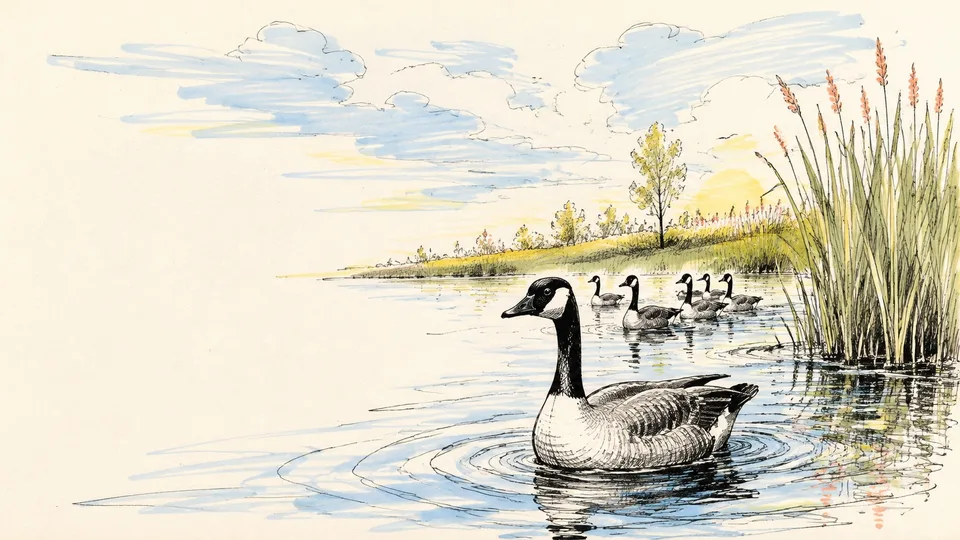

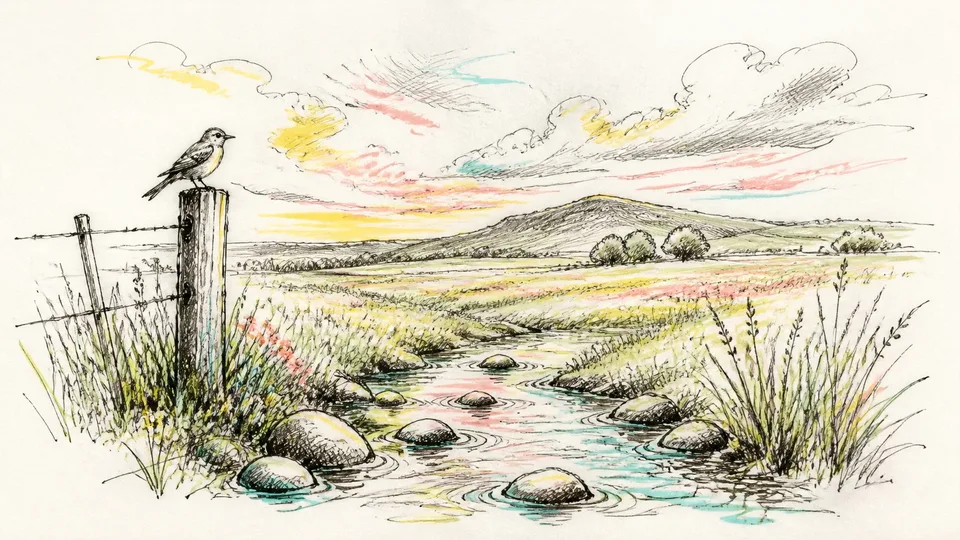
Nature is not only a distant mountain or a protected trail. It is the rain collecting in a gutter, the weed beside a step, the bird calling from a wire, and the changing light on a kitchen wall. The natural world keeps reaching us through ordinary openings.
These poems about nature include two sonnets, a haiku, a villanelle, and blank verse. Together they move from a small patch of earth to a wide sky, making room for wonder that does not require us to know every name. They can accompany a walk, a lesson, a journal, or a quiet moment at a window.
I learned early that attention is a form of gratitude. A creek stone, a field after rain, or a bird balancing on a fence can teach patience without giving a speech. If you want another collection with a natural focus, try these poems about a tree or these poems about the elements.
Poems About Nature
The World Outside the Window
This Shakespearean sonnet uses an ABAB CDCD EFEF GG pattern to bring a large natural world into a small room. The final couplet suggests that wonder begins with the willingness to look closely.
The world outside the window does not wait,
It lifts a wing, it bends a blade of grass,
A cloud moves slowly past the garden gate,
And lets the hurried afternoon pass.The river keeps a language under stone,
The sparrow tests the weather with a song,
The field can hold a silence of its own,
And teach the restless heart where it belongs.I do not need to name each moss and tree,
Nor gather every answer from the rain,
It is enough to see what comes to me,
And let the seen world widen once again.A window is a small and faithful start,
The earth grows larger when we give it heart.
Morning After Rain
This haiku catches the clean brightness that follows a shower. Its five, seven, five syllable pattern keeps the attention on water, leaves, and the first returning bird.
Rain beads on green leaves
One blackbird tests the clear morning
Puddles hold the sky
Under the Open Sky
This second sonnet follows a Petrarchan ABBA ABBA octave and a six line resolution. It considers the freedom of a wide sky without pretending that a person must always feel brave beneath it.
Under the open sky, my questions rise,
As kites once rose above the summer field,
The blue is not a promise to be healed,
Yet gives my thoughts a little room and size.A rim of cloud moves slowly through my eyes,
The grass bends low, then lifts what it can yield,
A hawk writes one dark letter on the field,
And disappears beyond the western rise.I carry all the weather I have known,
The sudden rain, the winter's patient white,
The heat that made a garden's roots grow strong,
The nights when every star seemed overgrown.The sky does not explain the road to me,
It simply leaves a little space to see.
The Earth Keeps Turning
This villanelle uses nineteen lines, two repeating refrains, and two rhyming sounds. Its returning lines echo the dependable movement of seasons while the middle lines notice small changes at ground level.
The earth keeps turning underneath our feet.
The seed remembers darkness as it grows.
The patient ground makes every loss complete.A rain worn stone can make a resting seat,
A root can find the crack where water flows.
The earth keeps turning underneath our feet.The fox leaves prints where morning feels most sweet,
The river takes the shape the valley knows.
The patient ground makes every loss complete.We gather close when summer days retreat,
Then learn the gifts that winter quietly sows.
The earth keeps turning underneath our feet.No season stays, no field remains replete,
Yet every ending opens what it owes.
The patient ground makes every loss complete.I place one hand upon the garden seat,
And feel the dark below the green still flows.
The earth keeps turning underneath our feet.
The patient ground makes every loss complete.
A Lesson from the Field
This blank verse poem follows a walk across a field in changing weather. The unrhymed lines keep a steady pace and allow the speaker to learn from what bends, waits, and returns.
The field is bright, then dark beneath a cloud.
A wind moves through the grass in patient waves.
I watch one stalk return after it bends.
No voice announces that the stalk is strong.
It simply rises when the weather shifts.
A beetle crosses underneath my shoe.
I stop and let the small road remain clear.
The world is full of lives I cannot see.
My gratitude begins by making room.
I walk back slowly, carrying the field.
A Wider Kind of Attention
Nature can make a day feel larger without making it less personal. The bird outside the window may be carrying on with its ordinary work, yet our noticing changes the shape of the hour. Wonder is often a practice before it becomes a feeling.
Use The World Outside the Window for a classroom, a note, or a reminder to look up. Morning After Rain is small enough for a caption, while Under the Open Sky suits a person beginning again. The villanelle can accompany a seasonal gathering, and A Lesson from the Field belongs to a reflective walk.
If you share one of these poems, add a living detail that belongs to your place. Name the tree, the weather, or the bird you actually saw. The more faithfully we notice, the less we need to make the natural world perform for us.
The earth will keep turning without our permission, but we are fortunate to turn with it. A little attention can make a familiar path feel new. Look closely, leave room, and let the world outside your window keep teaching you.
A notebook for the details you want to keep
Any notebook, scrap paper, or notes app will do. If you want a dedicated place for these observations and memories, this is one optional notebook.
These are paid links. As an Amazon Associate I earn from qualifying purchases.
- View on Amazon
Essentials Dot Matrix Notebook
Record a bird call, a weed beside the step, or a change in the light before turning the detail into a few lines.
One A5 hardcover notebook, 192 dot grid pages, 5¾ × 8¼ inches
Send a little poetry to someone you love.