

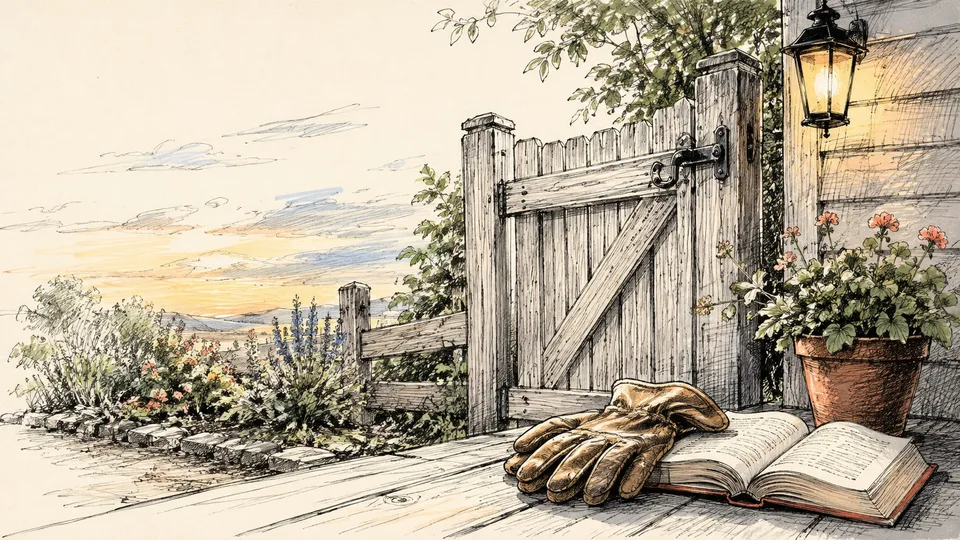
Writing about men can become too general very quickly. A single word cannot describe a father who listens, a friend who makes room, a teacher who waits for the right question, or a neighbor whose hands are always ready to help. The most honest poems begin with a person and a small, recognizable act.
These poems about men look for character in ordinary places. The collection includes two sonnets, free verse, a ballad, and a haiku. None of the poems tries to make every man fit one picture. Instead, they notice the many ways a person can be strong, gentle, funny, thoughtful, uncertain, or still learning.
I have learned through teaching that people reveal themselves in details. A pencil passed across a desk, a gate repaired before anyone asks, or a pause that lets someone finish speaking can tell us more than a grand description. Those details give a poem a human face without pretending to tell a whole life.
If you are writing for a father, brother, husband, friend, teacher, or coworker, begin with what he actually does. These poems about women offer a different collection of lived details, while these poems about friends may help when the relationship is built on shared time. I hope the poems below leave room for people to be more than a category.
Poems About Men and the Lives They Build
Hands That Mend
The hands in this poem are not meant to stand for every man. They belong to a particular kind of quiet care, the sort that fixes what is loose and leaves a room easier to use. I like the open ending because it lets the reader add his own person and his own useful gesture.
Free verse
There are hands that know
how to find the loose screw
in a tired chair.Hands that set a book
beside the waiting cup
before the question is asked.Hands that lift a gate,
stir a pot,
fold a map,
and point toward home.I trust a life
that leaves something steadier
than it found it.
The Work of Being Kind
This sonnet begins with visible work and turns toward the quieter work of attention. I notice the line about making room because kindness often looks like a small adjustment rather than a performance. It may help a reader who wants to honor a man for the way he affects a room, not just for the tasks he completes.
Shakespearean sonnet
Some men are known by work their hands have done,
A hinge repaired, a book laid open wide,
A patient joke that welcomes everyone,
A chair pulled near, a space made at the side.
The quiet gifts can fill a room with grace,
Though no one keeps a record of the day,
A listening heart can change the shape of place,
And send a tired traveler on her way.
The strong are not the loudest in the hall,
They may be those who pause to hear the whole,
Who leave a little mercy for us all,
And guard the tender borders of the soul.
No single word can name the lives we see,
Each person grows in many ways to be.
The Man Who Kept the Light
The ballad gives this collection a small story instead of a list of qualities. I like the image of the porch light because it shows welcome without requiring a speech about it. This poem may fit a card for someone whose reliability has been felt in many quiet evenings.
Ballad
The man who kept the porch light on knew weather by the sky,
He watched the road grow dark with rain and waited passing by.
A neighbor came with tired hands, a child came home late,
The yellow circle by the door made welcome at the gate.He did not claim the storm would end or say what storms may bring,
He found a towel, warmed the soup, and heard the doorbell ring.
The night moved on, the clouds grew thin, the gutters sang their tune,
And someone found the courage to look up and notice moon.Years later, when the house was changed and porch boards showed their age,
The light still held a simple place, a bright and patient page.
Some men teach us by the way they make a little room,
Then leave a lamp inside the heart that keeps away the gloom.
Not One Shape
I wanted the second sonnet to resist the idea that there is one correct way to be a man. The father, brother, teacher, and friend in these lines are different roles, but each is measured by attention rather than a rigid rule. I value that widening movement because it can help a reader write with respect instead of relying on a stereotype.
Shakespearean sonnet
No single road can tell a man’s whole story,
One learns through loss, one learns through open skies,
One carries laughter, one carries the glory
Of quiet work that no one sees arise.
A father bends to tie a child’s loose shoe,
A brother saves a place beside the fire,
A teacher waits for one good word to come true,
A friend can lift a hope a little higher.
The range of lives is wider than a name,
And gentleness can live in every part,
The hand that builds can also tend a flame,
The careful strength is measured by the heart.
So let each man be more than what we knew,
With room for change to make the old world new.
After the Rain
The haiku is brief, but I like how it gives strength a setting instead of a definition. One person opening an old gate is enough to make a dark morning feel shared. This could be a small addition to a thank you note for a man whose help has made a place more welcoming.
Haiku
Rain darkens the road
One man opens the old gate
Warm light fills the hall
Let the Person Stay Visible
A good poem about men does not need to praise toughness or turn every feeling into a lesson. It can notice humor, patience, uncertainty, creativity, work, affection, and the willingness to begin again. The more particular the image, the more room the reader has to recognize someone real.
If you are choosing one of these poems for a message, look for the line that sounds closest to the person you know. Add a place, a tool, a habit, or a phrase he often uses. The small addition will usually matter more than a long collection of impressive compliments.
I also hope the poems make room for men who are still learning how to speak about care. A person can be dependable and still need encouragement. He can be strong in one season and tender in another. A life does not lose its dignity when it changes shape.
For a more specific family tribute, these poems for a father’s advice and legacy may give you another starting point. You can keep the poem short, read it aloud, or let it rest inside a card where the person can return to it later.
The men we remember are often remembered through ordinary light. A repaired gate, a shared meal, a patient answer, or a lamp left on can become part of the inner map we carry. I hope these poems help you name that kind of lasting presence.
Send a little poetry to someone you love.