

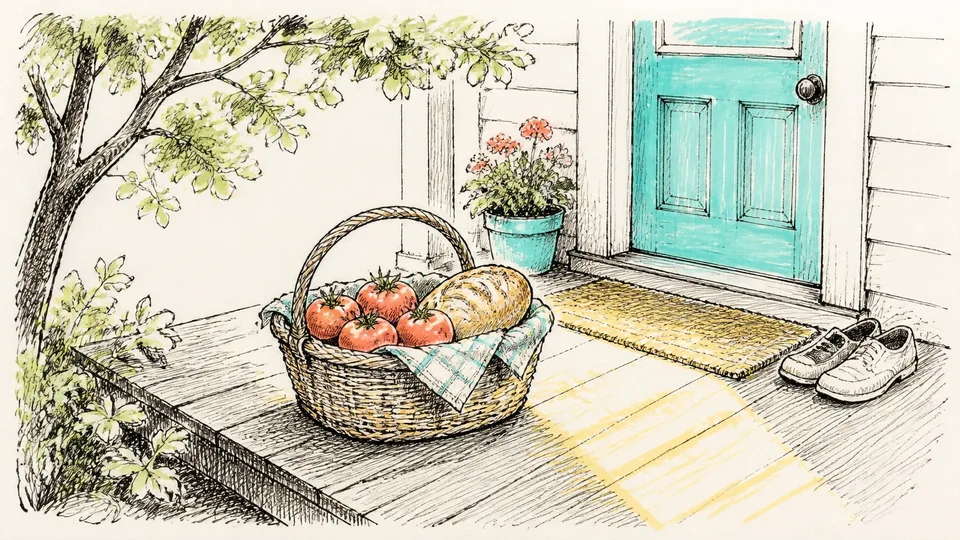
Kindness rarely arrives with a loud announcement. It may be a door held open, a place made at a table, a message answered with care, or a basket left where someone can find it. These actions look small from a distance, but they can change the shape of a difficult hour.
These poems about kindness include two sonnets, a haiku, a ballad, and free verse. They are for a thank you note, a classroom reading, a family gathering, or the private reminder that gentleness is practical work. Each poem pays attention to a different kind of care, from a shared umbrella to a patient reply.
I have always trusted kindness that knows how to use its hands. Someone repairs a button, moves a chair, carries a bag, or waits while another person finds the right word. Such gestures do not need a stage. They become part of the quiet structure that lets a community stand.
Kindness also requires attention. We cannot always know what another person needs, so we can begin by listening and asking without pressure. A considerate poem does not tell a reader to feel differently. It offers company and leaves a little room.
If you would like another collection about care in daily life, these poems about family may be a helpful next step. These poems about gratitude also notice the people and gestures that carry us. I hope the poems below make you think of one small kindness you have received or might offer today.
Poems About Kindness in Motion
The Door Held Open
The open door in this poem is more than a polite gesture. I notice how it gives a tired person time to cross the rain without demanding an explanation, and I like that quiet respect. This sonnet may help when you want to thank someone whose care made a hard moment easier.
Shakespearean sonnet
A door held open changes little air,
Yet lets a tired person cross the rain,
It says there is a little room to spare,
And asks no story in return again.
A neighbor leaves tomatoes by the gate,
A child puts crayons back before she goes,
A driver waits, though minutes make him late,
A stranger points the lost one where to go.
We often search for kindness dressed in gold,
While it arrives in ordinary shoes,
It warms the story someone has not told,
And gives a little space for them to choose.
The heart grows strong by practicing this art,
One gentle act can widen every heart.
Shared Umbrella
The umbrella tilts toward both people, which makes the kindness feel shared rather than one sided. I enjoy the sound of the rain and the two sets of footsteps finding a rhythm together. These lines could fit a short message to someone who stayed beside you through an inconvenient day.
Haiku
One umbrella tilts
Soft rain taps on both our sleeves
Shoes keep time below
The Library Card
This ballad remembers a library as a place where help can be offered without making a person feel small. I like the librarian’s simple patience and the child’s growing confidence as the shelves become familiar. Read it with a young reader, or keep it for anyone who has been welcomed by a good public room.
Ballad
A child came in at closing,
Her question held up high,
The librarian set down her pen
And pointed to the sky.“The books are full of pathways,
You need not choose them all,”
She found a chair beside the lamp
And showed a smaller hall.The child took home a story,
The rain began to fall,
Next week she brought a friend along
And knew the way through all.The library stayed quiet,
The evening filled the street,
Yet one kind word beside a lamp
Made every doorway meet.
A Small Reply
I wanted this poem to stay close to the moment when a message could easily be ignored. The reply is small, but it tells the waiting person that their words have landed somewhere safe. That is why I think it belongs in a note to a friend who needs listening more than advice.
Free verse
I read your message twice.
Not because it was difficult,
but because I wanted to hear
the part you left unsaid.I cannot mend the whole afternoon.
I can answer.
I can stay near the phone.
I can remind you that your name
is welcome here.
What the Hands Remember
The mended button is such a plain object, yet it carries the whole idea of kindness in this poem. I notice how care travels through coats, soup, chairs, and small repairs, and I love the way those acts keep moving beyond the person who began them. It may be a comforting piece for anyone who wonders whether a quiet kindness has made a difference.
Petrarchan sonnet
A mended button waits upon the line,
Its thread is small, its quiet work is plain,
It holds a borrowed coat against the rain,
And keeps one day’s belonging warm and fine.
A bowl is filled, a chair is drawn in place,
The table leaves a little room for bread,
Someone who came in weary lifts the head,
And finds no need to hurry from this grace.
Kindness is not a medal we can wear,
It is the pause that lets another rest,
The coat returned, the burden made more fair,
The word that reaches gently through the chest.
What hands do once may travel far and wide,
A kindness keeps a doorway open inside.
The Useful Shape of Gentleness
Kindness is not only a feeling. It is a way of paying attention to what is in front of us and choosing a response that protects another person’s dignity. Sometimes that response is a warm meal. Sometimes it is a quiet answer, a patient wait, or the decision to leave room for someone who is not ready to speak.
“The Door Held Open” fits a thank you note for a person who made space. “Shared Umbrella” is brief enough for a card, while “The Library Card” celebrates help that builds confidence. “A Small Reply” is for the friend who listened, and “What the Hands Remember” honors practical care that may never be praised aloud.
When you write about kindness, avoid making the other person sound helpless. Name what they did and what it allowed you to do. You might thank them for waiting, explaining, carrying, repairing, or noticing. Specific words return some of the attention that their kindness gave you.
We can also practice kindness toward ourselves without turning it into self importance. Rest before the task becomes too heavy. Ask for help before the need becomes a crisis. Speak to yourself with the same patience you would offer a child learning a new road.
One small act will not repair every difficulty, but it can make a way through one moment. A door opens, an umbrella leans, a reply arrives, and the world becomes a little more livable. That is plenty of reason to keep kindness close.
Send a little poetry to someone you love.