
Family can be a shared history, a daily practice, or a circle of people who make room for one another. Some families are loud around a table. Others are separated by miles, joined by a phone call, a recipe, or the memory of a particular laugh.
These poems about family include two sonnets, a haiku, free verse, and a limerick. The collection makes room for tenderness and humor without pretending that every family story is simple. It is written for cards, reunions, quiet remembrance, and the ordinary moments when belonging becomes visible.
I think of family as a verb as much as a noun. Someone saves a seat, carries a casserole, listens to the same story again, or sends a message at exactly the right hour. If friendship is part of your family story, you may also enjoy these poems about the comfort of lifelong friendship and these poems about friends.
Poems About Family
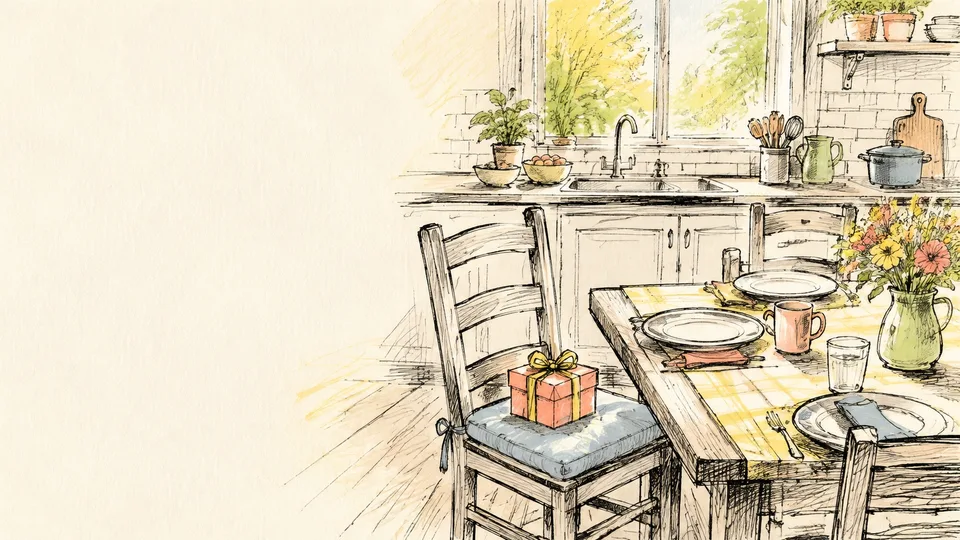
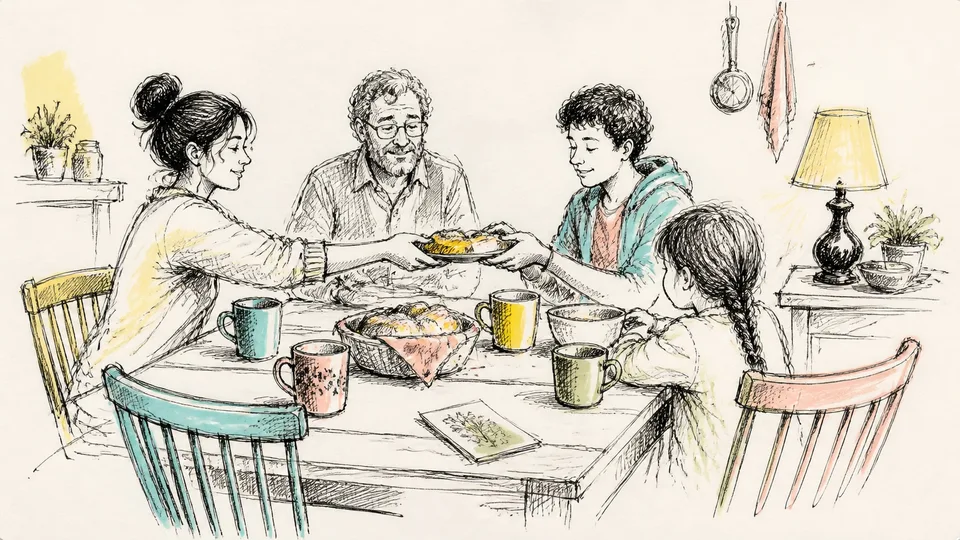
The Family Table
This Shakespearean sonnet uses an ABAB CDCD EFEF GG pattern. The table holds different ages, opinions, and absences, while the closing couplet defines belonging as the room made for one another.
The family table bears the marks of years,
A ring from heat, a scratch beside the bread,
It has received our laughter and our tears,
And held the words we wished we had not said.One chair is empty, one is pulled in close,
A child asks questions no one can ignore,
The evening gathers everyone it knows,
And leaves a little welcome at the door.We bring our different weather to the room,
Our careful hopes, our stories out of tune,
Yet someone fills the glasses, makes some room,
And turns the ordinary into noon.A family is not a perfect art,
It is the table making space for heart.
The Spice Tin
This haiku notices the handwriting and scent that gather around an old recipe. It uses a five, seven, five syllable pattern and lets family memory arrive through paper and spice.
Flour dust on old names
Cinnamon warms the kitchen
Hands remember home
Names in the Recipe Box
This second sonnet uses an ABBA ABBA octave and a six line resolution. It follows the way a recipe carries family history while still leaving room for a cook to change it.
The recipe box is crowded with the years,
With cards that hold a thumbprint, stain, and crease,
A little line that says to add more peace,
And names that sound like voices in my ears.I measure flour through laughter and through tears,
Then change one spice and watch the old release,
The dish becomes a present kind of feast,
Yet keeps the hands of earlier cooks near.We inherit more than ingredients and bread,
We take the ways that care was shown and made,
The chair pulled close, the tired child put to bed,
The patient answer when a question stayed.A family recipe can still be new,
When love keeps making room for me and you.
The Calls We Keep
This free verse poem follows a family connection carried through ordinary phone calls. Its short lines allow space for pauses, interruptions, and the comfort of hearing a familiar voice.
We call about the weather,
the grocery list,
a bird that landed on the rail.We call because the day is long.
We call because the day is short.
Between the details,
someone says,
“I am glad you are there.”
The Cousin Who Brought Pie
This limerick follows a five line AABBA rhyme pattern. Its gentle humor celebrates the family member who arrives with dessert and an opinion about every recipe.
A cousin arrived with a pie,
And winked at the clouds in the sky.
“My crust may be wide,
But the filling will hide
Every plan you had to be shy.”
Making Room for Belonging
Family poems work best when they leave room for real people rather than presenting one perfect picture. A shared meal, a remembered phrase, or a patient phone call can say more than a grand declaration. Small details allow readers to recognize their own homes.
Choose The Family Table for a reunion or a note of gratitude. Names in the Recipe Box is suited to a kitchen memory, while The Calls We Keep can accompany a message to someone far away. The limerick is a cheerful addition to a family gathering where laughter already has a seat.
If you share one of these poems, add one true object from your family story. It might be a recipe card, a worn chair, a particular mug, or the sound of a door opening. Specific objects keep affection from becoming a general phrase.
Families change shape across the years. People move, children grow, chairs become empty, and new places are made at the table. The work of belonging continues whenever we notice one another and choose to make room.
Send a little poetry to someone you love.