
A garden is rarely as tidy in the hands as it was in the first hopeful picture. A row wanders, a label disappears, and the plant we meant to move grows quite contentedly in the wrong place. The work can be absorbing, comic, disappointing, and unexpectedly generous, sometimes in the same afternoon.
These seven original poems about gardening stay close to the practice itself. They follow planting, weeding, sharing a harvest, putting away tools, and returning to a plot that is still unfinished. There is affection for flowers here, but also for the ordinary physical tasks that happen before and after a bloom. The separate poems about flowers make room for that particular beauty.
I am especially fond of the part of gardening that asks us to pay attention to what is actually happening. The plan matters, but so does the plant leaning across it. A person can bring care without being able to control every result. That tension gives these poems both their humor and their quieter moments.
You might read them with soil still on your cuff or from a chair nowhere near a garden. The work offers familiar human questions either way: what to tend, what to release, when to ask for help, and how to share something good when there is more than we can use.
Seven Poems about Gardening
The Crooked Row
The string in this story promises a straight line, but the hands have another idea. I like the gardener finding a way to enjoy the result without calling every surprise a mistake.
We stretched a string from peg to peg
And made the furrow neat.
Then somehow, while the seeds went down,
The line escaped our feet.It wandered round a buried stone
And leaned toward the gate.
We stood and viewed the little bend;
By then it was too late.The seedlings came in their own time,
A crooked little crew.
We had not made a perfect row;
We liked the things that grew.
What the Hands Learn
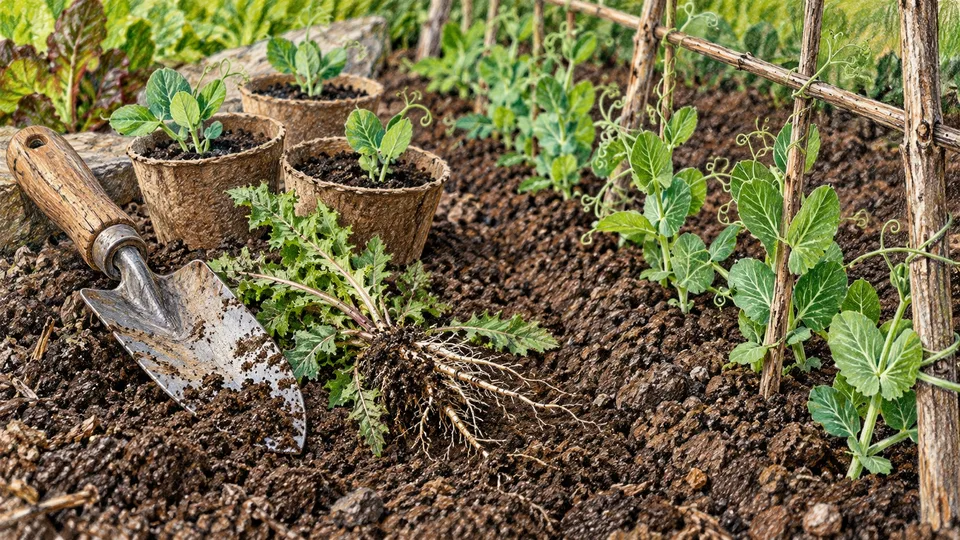
The small adjustments are what interest me in this working poem. Care becomes a series of decisions made close to the ground, where a distant plan cannot tell the whole story.
The hands that plant must learn to loosen first,
To break the clod without destroying all.
To feel the ground that holds a little thirst,
And make a place where slender roots can fall.The page had drawn the garden straight and clean;
The ground has stones the drawing never knew.
We kneel beside the difference in between,
And let the work give us another view.A careful touch can find a better way
Than force applied because the plan was right.
We lift a stem and let a leaf have day,
Then step aside to leave it room for light.The garden teaches through the work we do:
Attend to what is here, and start anew.
A Place for the Extra Beans
A harvest can become a reason to knock on a door. I like the exchange being ordinary enough that the bowl matters nearly as much as the vegetables.
There are more beans
than our supper knows what to do with.I fill the blue bowl
and take the short path next door.You return it next week
with three tomatoes,
still warm on one side.The garden has grown
beyond the fence.
After the Rain
The tool left outdoors feels recognizably human to me. This small reading notices the work waiting after the weather, without making the gardener perfectly organized.
Rain beads on the spade.
Green shoots lean across the row.
My boots wait for mud.
The Unfinished Garden
A garden can hold evidence of care and unfinished jobs at once. I find the shared bench at the end a better measure of the afternoon than a completely cleared list.
The weeds are thick beside the broken gate;
A fallen stake is waiting for a tie.
I came to set the whole small garden straight,
And clear each job that caught my passing eye.But there is more than one day's hands can do,
More ground than one impatient hour can clear.
The beans are green; one blossom opens blue;
These gifts are part of what is growing here.I set the spade beside the wooden seat
And let a friend come through the open gate.
The garden does not have to be complete
To offer us a place to sit and wait.We leave some work for morning, and remain
To watch the leaves grow darker after rain.
The Tool Shed at Dusk
Putting tools away can feel like the last quiet movement of a useful day. I enjoy the worn handles holding the history without needing a long explanation of who used them first.
The spade goes back against the wooden wall.
I shake the loose soil gently from the fork.
A line of light is waiting at the door.
The handles bear the polish of old hands.
I leave the gloves where morning eyes will look,
Then turn the little latch and cross the path.
Behind me, nothing asks to be admired.
The garden keeps its work beneath the dark.
A Little Work, a Little Growing
The repeated lines feel like returning to the same plot on different mornings. I like the garden offering patience without promising that every attempt will succeed.
A little work can leave a little room.
The soil is waiting underneath the rain.
We tend the ground before we see the bloom.The trowel is leaning in the open gloom;
A thread of green has lifted through the rain.
A little work can leave a little room.We lift the pot that waits beside the broom
And set it where the roots can spread again.
We tend the ground before we see the bloom.The shed is full of things we will resume;
A broken pot can wait beside the drain.
A little work can leave a little room.A failed attempt can cast a little gloom;
The page of plans has creases from the rain.
We tend the ground before we see the bloom.The evening takes the spade, the rake, the broom;
Tomorrow we can lift them up again.
A little work can leave a little room.
We tend the ground before we see the bloom.
Let the Garden Be a Place to Return
A gardening poem can notice effort without requiring a perfect harvest. If a line reminds you of a plant that failed or a plot that became too much, that memory can belong beside the more cheerful ones. The work is not always easy, and a person does not have to call every difficulty a gift.
For a shared reading, choose the mood that suits the moment. The crooked row may work well when people are laughing over an imperfect job. The extra beans may suit a note to a neighbor. The tool shed offers a quieter ending for someone who enjoys the feel of a useful day coming to rest.
I would also leave room for the gardener to stop. There will usually be another task, but the garden can be visited as well as managed. A bench, a patch of shade, or a conversation beside the path can become part of the life the work was meant to make possible. That is not time stolen from the garden.
These poems about dirt stay closer to the ground itself. Here, I would carry away the image of hands learning to adjust: care that looks, changes its plan, and returns when it can. An unfinished garden can still be a place where something worth tending is taking root.
Send a little poetry to someone you love.