

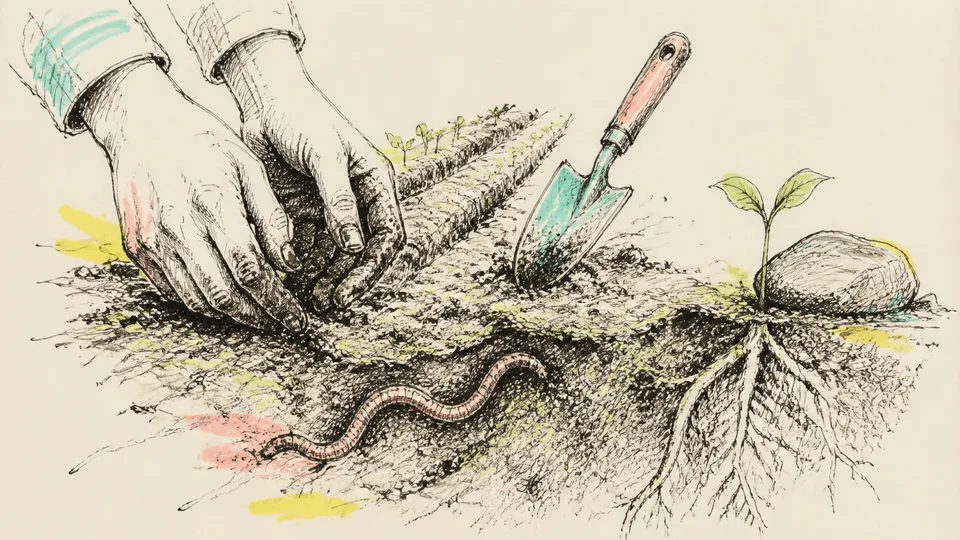
Dirt is easy to overlook until we need it. It holds roots, worms, rain, stones, and the marks of every person who has knelt to plant something. It can stain a cuff and still feel like a kind of welcome.
These poems about dirt include two sonnets, a limerick, a villanelle, and a haiku. They are for gardeners, children, farmers, teachers, and anyone who understands that the most important work often begins close to the ground.
I like the honest evidence of soil beneath a fingernail. It says that a person has touched a process they cannot completely control. If you enjoy poems about growing things, you may also like these poems about flowers and these poems about nature.
Poems About Dirt
The Ground Beneath the Seed
This Shakespearean sonnet follows an ABAB CDCD EFEF GG rhyme pattern. The ground becomes a patient keeper of hidden work, and the final couplet turns dirt into a place of trust.
The ground beneath the seed is dark and deep,
It holds the rain and every buried stone,
It gives the tired roots a place to sleep,
And keeps a quiet language of its own.A hand may press a seed into the earth,
Then wait through days that offer little proof,
The hidden work is not diminished worth,
It gathers strength beneath the weathered roof.I kneel beside the bed with muddy knees,
And learn that growth is rarely made for show,
The smallest life can rise through patient seas,
While roots remember where they need to go.The dirt receives the question and the art,
Then sends a green reply into the heart.
The Gardener's Small Mistake
This limerick uses five lines and an AABBA rhyme pattern. Its playful gardener plants a spoon by mistake and discovers that the soil is willing to forgive a little confusion.
A gardener planted a spoon,
And waited for sprouts by the moon.
A beet came up first,
The spoon stayed immersed,
So lunch was prepared rather soon.
What the Soil Remembers
This second sonnet uses an ABBA ABBA octave followed by a six line resolution. It considers soil as a record of seasons without treating the past as a prison.
The soil remembers every fallen leaf,
The year's dry heat, the sudden springtime rain,
The root that failed, the root that rose again,
The hand that came to help and stayed for grief.It does not keep a ledger of belief,
Or ask the seed to justify its pain,
It makes a room for loss and living gain,
And gives the dark a patient kind of relief.I turn the earth and find a stone of blue,
A worm retreats, a thread of root is near,
The garden holds more lives than I can view,
Yet still it lets me work without a fear.Beneath my hands, the hidden world is wide,
A humble ground that keeps the hope inside.
The Dirt Keeps Turning
This villanelle uses nineteen lines, two repeated refrains, and two rhyming sounds. Its returning lines follow compost, seasons, and the way endings become material for new life.
The dirt keeps turning what the seasons bring.
A fallen leaf becomes a softer ground.
The dark can hold the promise of a spring.A root moves slowly underneath the ring,
A worm makes room where stones were tightly bound.
The dirt keeps turning what the seasons bring.No hand can force the hidden seed to sing,
No clock can make the buried green be found.
The dark can hold the promise of a spring.We learn to trust the work beneath each thing,
The quiet change that does not make a sound.
The dirt keeps turning what the seasons bring.A garden gives the tired heart a wing,
Though every bloom returns to common ground.
The dark can hold the promise of a spring.I leave my gloves beside the water ring,
And feel the earth turn gently underground.
The dirt keeps turning what the seasons bring.
The dark can hold the promise of a spring.
Mud on the Boots
This haiku keeps a garden walk close to its evidence. Its five, seven, five syllable pattern lets the muddy boots become a small sign of work and weather.
Mud dark on my boots
Worms turn beneath the bean rows
Rain feeds the brown earth
The Ground That Receives Us
Dirt is not glamorous, but it is generous. It receives scraps, seeds, rain, footsteps, and the remains of seasons. It gives back slowly, in forms we cannot always predict.
Choose The Ground Beneath the Seed for a garden reading or a note about patience. The limerick can make a child laugh, while What the Soil Remembers suits a gardener who has learned through loss. The villanelle belongs to a seasonal reflection, and Mud on the Boots fits a short caption.
If you share one of these poems, name the soil that belongs to your place. Mention clay, sand, garden loam, or the dirt beside a familiar fence. Honest texture helps a poem feel rooted.
The ground does not ask us to be perfect before it receives us. It gives every seed a chance to begin, every fallen thing a place to change. Kneel when you can, touch the earth, and let the work start small.
Useful supplies for a little garden work
Borrow tools or use the garden supplies you own. For adults taking up the planting described here, a small hand tool can be enough to begin.
These are paid links. As an Amazon Associate I earn from qualifying purchases.
- View on Amazon
Fiskars Ergo Garden Trowel
Dig a small planting hole or work the soil in a pot while noticing the roots, stones, and textures that appear in the poems.
One garden hand trowel
Send a little poetry to someone you love.