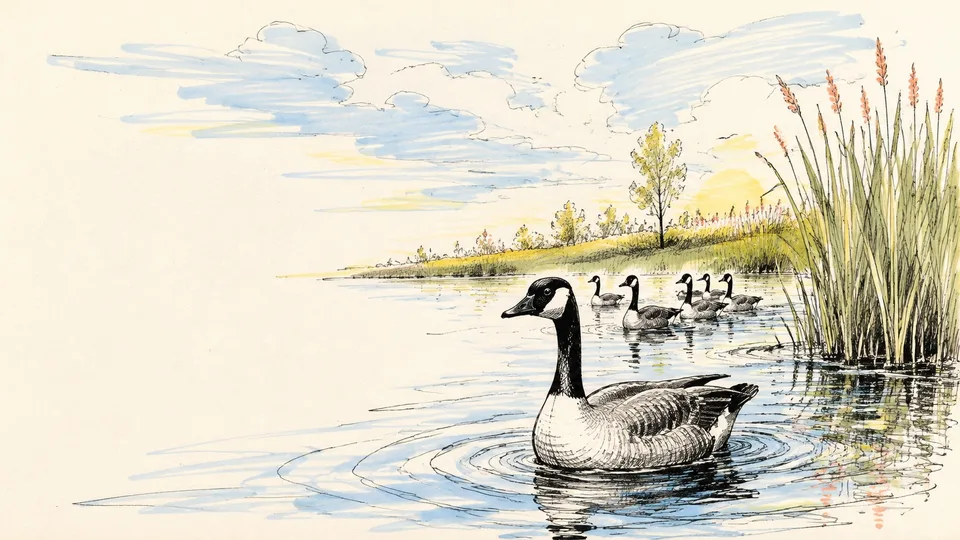

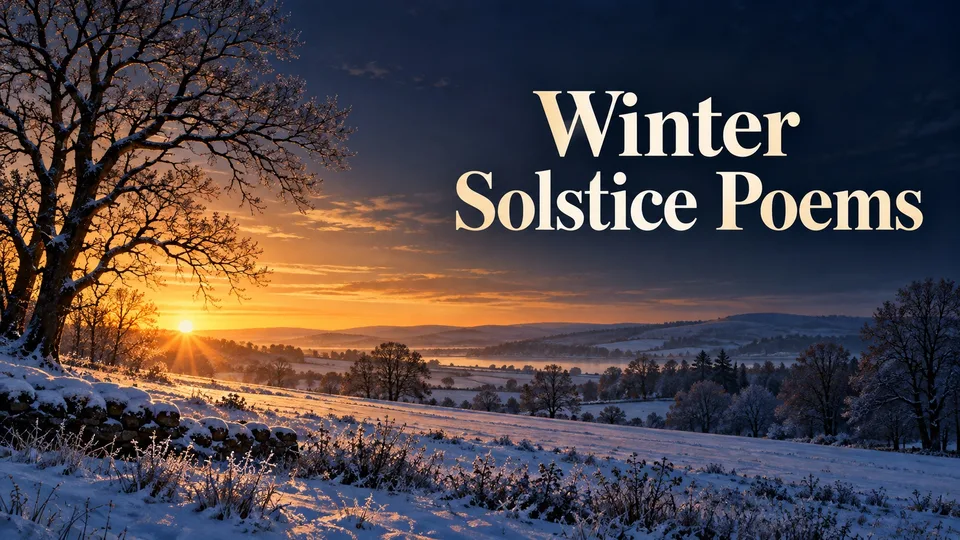
At the blue edge of a winter evening, a familiar fence can look newly drawn. Its posts become dark strokes against the field, and the house behind me begins to show its own small light. I like that moment before the view disappears. There is still enough to notice, even when there is not much daylight left.
These winter solstice poems offer eight original readings about the longest night and a gradual return of light. They begin with a brief winter image, then move through a quiet room, a lantern walk, a bare garden, and the patience of a window. The collection takes a secular, reflective approach, so it can be shared without a particular ritual or religious setting.
The Northern Hemisphere winter solstice marks the year's shortest period of daylight. Afterward, daylight begins to increase, as NASA explains in its solstice overview. That turning is the natural starting point for these poems. Their hope is gradual rather than a promise that the cold will immediately end.
For a small reading, choose “Blue Hour” or “The Slow Turn.” “The Lantern Walk” gives a gathering a gentle story, while the returning lines in “The Light Returns by Little” can be shared by several voices. I have left room for darkness as well as dawn. My poems about winter offer more scenes from the wider season. Here, we will pause near its turning, without asking the night to hurry away.
Eight Poems for the Winter Solstice
Blue Hour
The fence nearly disappears, but the window becomes easier to see. I like how this small shift lets the evening hold a change without making an announcement.
Haiku
Blue dusk on the snow
Bare fence posts fade into night
One warm window stays
The Slow Turn
I wanted the room to remain ordinary while something much larger turns beyond it. The boots by the door remind me that a meaningful evening can still belong to the life we were already living.
Blank verse
The window holds the last light of the day.
Our boots are drying slowly by the door.
The world has turned beyond our little room.
We need not hear its turning to belong.
I set a chair beside the fading pane,
And watch the garden gather into blue.
A Place for the Dark
The unlit corner is not a problem the speaker needs to solve. I appreciate that little permission, especially for a reader who is tired of being asked to brighten every quiet feeling.
Free verse
I leave one corner
of the room unlit.
The chair is still a chair.
The folded blanket waits.
Not everything needs
to be made visible
before I can rest.
The Lantern Walk
The walkers turn home when they are ready rather than proving how far they can go. I like the way their small circle of light gives the dark road company without trying to defeat it.
Ballad
We took a lantern down the path
Beside the sleeping field.
The fence was dark; the frozen grass
Had little left to yield.We walked until the garden gate
Was small behind our glow.
Then turned toward home and took our time
Across the quiet snow.The road was long beyond our steps,
The night still stretched ahead.
We brought the lantern through the door
And shared a piece of bread.
The Light Returns by Little
The repeated lines ask for patience rather than a burst of confidence. I like the river under the bridge because it gives the poem a movement we do not have to watch or direct.
Villanelle. The two recurring lines may be spoken together.
The light returns by little, soft and slow.
The trees stand dark against the folded night.
There is a kind of hope that waits to grow.We do not need a trumpet made of snow,
To name the patient turning of the night.
The light returns by little, soft and slow.An empty garden keeps the seeds below.
A candle marks the hours with quiet light.
There is a kind of hope that waits to grow.A bare branch holds the weight of what we know.
Its darkened lines are drawn against the white.
The light returns by little, soft and slow.The river has its own deep way to flow,
Beneath the bridge, beyond our little sight.
There is a kind of hope that waits to grow.We warm our hands beside a modest glow,
And let the window frame the coming light.
The light returns by little, soft and slow.
There is a kind of hope that waits to grow.
Beneath the Frost
I notice the seed packet before the speaker makes any plans for spring. It is enough to remember that another season has a place, while letting the garden belong to this one.
Free verse
The seed packet stays
in its drawer.
Outside, frost has written
over the garden path.
I do not open the packet.
I only remember
where I put it.
The Window Waits
The narrow light on the sill gives this poem a modest measure of change. I like its refusal to turn patience into a demand, which may make it useful for a quiet solstice reading.
Sonnet
The window keeps a narrow band of gold,
Before the field is gathered into gray.
I fold the blanket close against the cold,
And let the garden have its winter day.
No sudden green has opened on the tree;
No robin brings a finished song of spring.
The turning does not need to hurry me,
Or make a bright announcement of each thing.
A little light is resting on the sill;
The house has room to hold this quiet night.
I watch the branches settle, dark and still,
A distant window answers with its light.
The window waits, and I can wait here, too,
While gold grows faint and evening deepens blue.
What Winter Leaves Us
The cleared space inside a bare branch is what stays with me here. I wanted winter's spareness to offer a way of looking, without pretending that everyone finds the season easy.
Sonnet
The bare tree shows the places leaves once hid,
A crooked joint, a hollow near the crown.
The field lies still beneath its silver lid;
The road is quiet on its way to town.
I see the shape of things without their green,
The patient fence, the slope beside the gate.
A smaller world comes slowly into scene,
And gives the eye a reason not to wait.
The night is long, but looking has its hours;
A lamp can hold a page against the dark.
We need not fill each space with summer flowers,
To find the branch that lets us see its mark.
What winter leaves is room to notice more,
The plain and faithful things beside our door.
Letting a Small Reading Be Enough
There is no required way to share a solstice poem. You might read one beside a window, send a short selection to a friend, or let a gathering hear a longer poem before conversation begins. A quiet reading can mark the evening without turning it into an event that needs elaborate preparation.
If you read with other people, choose the poem before asking anyone to join. The villanelle offers two lines that can return in a group voice, while one person carries the changing details. Let the pace remain comfortable. A pause can be part of the reading, especially when the subject is a long night.
For a private reflection, notice one thing that is still visible after the light begins to fade. It might be a fence post, a branch, or the pale edge of a path. You can write a sentence about it without looking for a lesson. Sometimes attention is useful before it becomes an explanation.
Readers seeking a different tradition may prefer the site's Pagan Yule poems, which approach the season through earth and hearth imagery. These solstice readings stay with ordinary nature, rest, and the gradual turning toward daylight.
I hope the poems leave you a little less hurried. The longest night does not ask us to solve the coming year before morning. We can tend a small light, keep a place for rest, and let the next change arrive in its own measure.
Useful supplies for a quiet solstice evening
A window and a few unhurried minutes are enough. Use an existing notebook or decorations before choosing anything new.
These are paid links. As an Amazon Associate I earn from qualifying purchases.
- View on Amazon
Homemory flameless tea lights
Place small lights on a reading table to mark the longest evening without an open flame. Adults should handle the lights and keep button batteries away from children and pets.
12 warm-white LED tea lights with installed CR2032 batteries
- View on Amazon
Essentials Dot Matrix Notebook
Write down the fence, branch, or fading-light detail you notice before the evening reading.
One A5 hardcover notebook, 192 dot grid pages, 5¾ × 8¼ inches
Send a little poetry to someone you love.