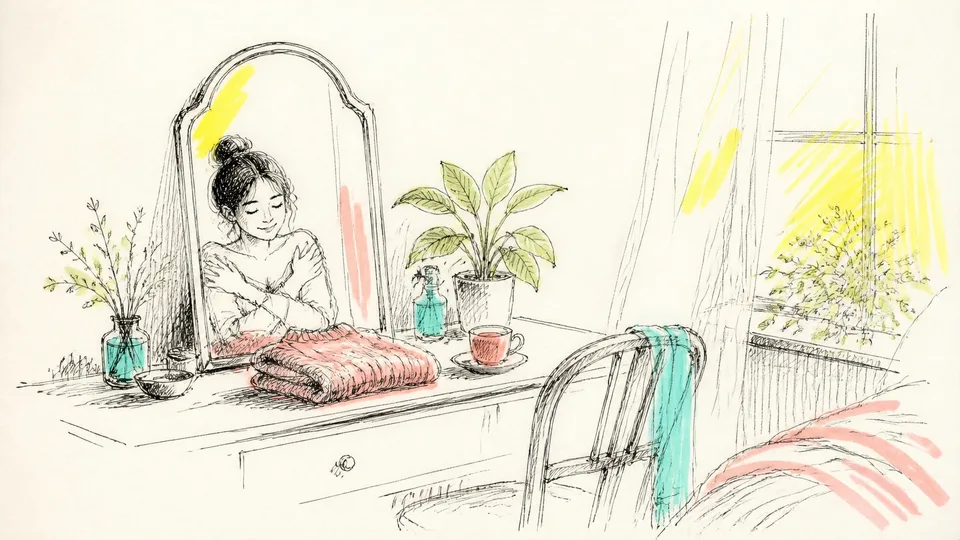


Grief does not follow a tidy path. It may arrive as tears, silence, anger, relief, gratitude, or a sudden memory in the middle of an ordinary task. These poems for grief and loss of a loved one are not meant to explain sorrow or hurry it away. They are small places to rest when words are difficult.
You can read them privately, share one with a grieving friend, or use a few lines in a memorial note. If the loss is recent or the days feel unsafe, reach toward a trusted person, grief counselor, faith leader, or qualified mental health professional. For a service, you may also find poems for funerals and celebration of life services helpful.
Poems for Grief and Loss of a Loved One
The Shape of Missing You
Missing someone can have a physical feeling, as if the day has a space that used to be occupied. This poem gives that absence a shape without treating it as something to solve. It can be shared when a simple acknowledgment feels kinder than advice.
I miss you in the kitchen light,
In footsteps not heard here,
In every ordinary place
That says you once were near.The shape of missing has no edge,
It changes with the day.
I hold it gently as I learn
To love you in this way.
The Memory Cup
Small objects can hold a surprising amount of memory. This poem uses a cup as a gentle doorway into a shared moment. It suits a reader who finds comfort in the details of daily life.
I lifted up the memory cup,
The one you used each day.
The room was still, the morning new,
Yet you were not far away.A little warmth touched both my hands,
A little ache came through.
Some things can hold a whole old world,
And this one holds you too.
No Need to Be Strong Today
People in grief are often told to be strong when what they need is permission to be human. This poem offers rest from that expectation. It is written for a day when getting through the next hour is enough.
No need to be strong today,
No need to make it clear.
Let sorrow have the chair beside you,
Let someone hold you near.The heart can carry only so much,
The breath can come in waves.
You do not have to walk alone
Through all the grief this day gives.
The Love We Learned
Loss can reveal the ways a loved one shaped us. This poem turns toward those lessons without reducing a person to a perfect memory. It is a thank you for the love that continues through changed behavior.
I learned to leave the light on low,
To listen before I speak.
I learned that kindness has a strength
The hurried rarely seek.You taught me more than words could say,
More than the years could prove.
I carry how you loved the world,
And that is how I love.
The Day Comes Slowly
Some mornings after loss begin very slowly. This poem does not demand a bright future, only a little patience with the next step. The image of dawn keeps hope quiet and believable.
The day comes slowly through the glass,
A pale and careful blue.
I do not ask it to be kind,
I only let it through.One breath, one cup, one open door,
One step across the floor.
The heart may learn the shape of now,
Then learn a little more.
A Name in the Wind
Nature can make memory feel both near and far. This poem uses wind as a way for a name to move through the world without claiming that the person is literally present. It is a reflective choice for a quiet memorial moment.
Your name was moving in the wind,
Or perhaps I heard the trees.
The sound was gone before I knew
What comfort came with ease.I stood beneath the open sky,
I let the moment stay.
Some memories arrive like birds,
Then rise and fly away.
Love Does Not End Here
This closing poem distinguishes love from physical presence. It does not deny the pain of loss, but it offers a way to imagine care continuing through memory and action. It can be shared at the end of a personal note.
Love does not end here at the door,
Or vanish with goodbye.
It moves through every life you touched,
Through earth and rain and sky.We will not know the road at once,
We will not always see.
Yet every kind and faithful thing
Keeps part of you with me.
There is no correct timetable for grief. Let a poem be a companion, not a command, and give yourself permission to return to the same lines whenever the day asks for them.
Send a little poetry to someone you love.