
Timing shapes a life in ways we can see only afterward. A door opens before we feel ready. A hoped for answer arrives late. We meet a person, discover a calling, or understand an old lesson at a moment no calendar could have predicted. It is natural to wonder whether we began too soon, waited too long, or missed our chance entirely.
These poems about timing do not claim that everything happens for a reason. Some delays are painful, some opportunities are unfairly lost, and patience does not make every outcome right. The poems stay with the human experience of clocks, seasons, hesitation, and action. They ask how we might live when certainty about the perfect moment is unavailable.
Gardens have taught me something about this. Seeds share the same soil and rain, yet they do not all rise on the same morning. One green tip appears while another remains hidden. The difference is not a moral judgment. Growth has rhythms that cannot always be hurried from above.
If you are standing at a threshold, these poems for new beginnings and life transitions may offer company. If the waiting has asked for endurance, you may also find something useful in these poems about strength.
Poems About Timing
The Clock and the Seed
Clocks measure hours, but living things follow other rhythms. This poem places a clock beside a planted seed and lets each keep its own kind of time. It is for anyone comparing their progress with someone else.
The clock repeats its measured word,
The seed stays still below.
One tells me every minute passed,
One knows when it should grow.I cannot pull the green shoot up,
Or bargain with the spring.
Some time is counted on a face,
Some time is listening.
Five Minutes After Courage
We sometimes recognize the brave response just after the moment has passed. This poem treats delayed courage as something that can still teach us. A missed chance is not the end of every chance.
Five minutes after courage called,
I found the words to say.
The room was closed, the chair was bare,
The moment walked away.I wrote the words upon a page,
I kept them clean and true.
The next time courage calls my name,
I may know what to do.
The Late Bloom
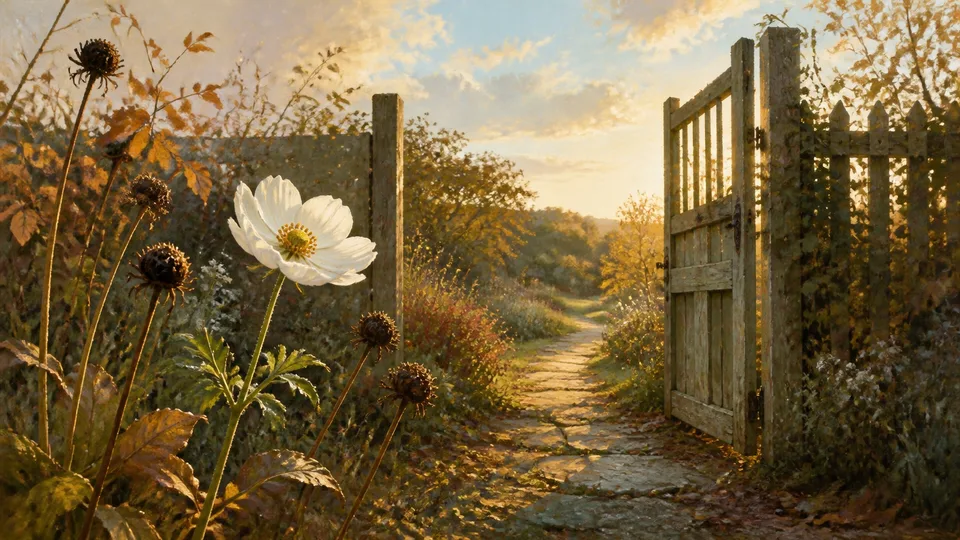
Beginning later than expected can bring embarrassment as well as joy. This poem uses a garden bloom to challenge the idea that one season fits every life. The flower does not apologize for its hour.
The garden spent its early gold,
The bees had changed their round.
Then one white blossom opened wide
Above the cooling ground.It did not ask what June had done,
Or mourn the vanished noon.
It gave September all its light,
And called that hour in tune.
Waiting Room
Waiting can feel like an empty space between meaningful events. This poem notices the life still occurring there. Small acts of attention keep the pause from becoming invisible.
We call it only waiting time,
As if no life is here.
Yet someone holds a paper cup,
Someone draws a chair near.The clock moves on, the answer waits,
The window fills with rain.
A kindness offered in between
Is never time in vain.
When the Door Is Open
Patience matters, but so does movement. This final poem considers the moment when waiting turns into avoidance and an open door asks for a step. The answer is not certainty, but willingness.
I waited for a perfect sign,
A bell, a blazing sky.
The door stood open in the hall,
The ordinary day went by.At last I heard no voice but mine,
No promise from above.
I crossed because the path was clear,
And carried what I love.
Living Without Perfect Timing
We often tell the story of a decision as though its timing was obvious. Looking backward smooths the rough edges. We forget the uncertainty, the second thoughts, and the ordinary weather of the day we chose. Real decisions are usually made with partial knowledge and a heart that is still learning.
These poems can help name different places in that process. The Clock and the Seed is for necessary patience. Five Minutes After Courage is for regret that can become preparation. The Late Bloom honors a beginning that did not follow the expected schedule. When the Door Is Open belongs to the moment when one honest step matters more than one more sign.
Try not to use timing as a weapon against yourself. Earlier is not always wiser, and later is not always failure. We act within circumstances, responsibilities, fears, resources, and hopes that other people may never fully see. Kindness makes a better companion for reflection than shame.
There may never be a perfect moment, but there can be a truthful one. It may be the hour when you have enough information, enough support, or simply enough willingness to move. Until then, waiting can still contain kindness, learning, and attention. When the door truly opens, may you recognize the quiet courage already standing beside you.
Send a little poetry to someone you love.