

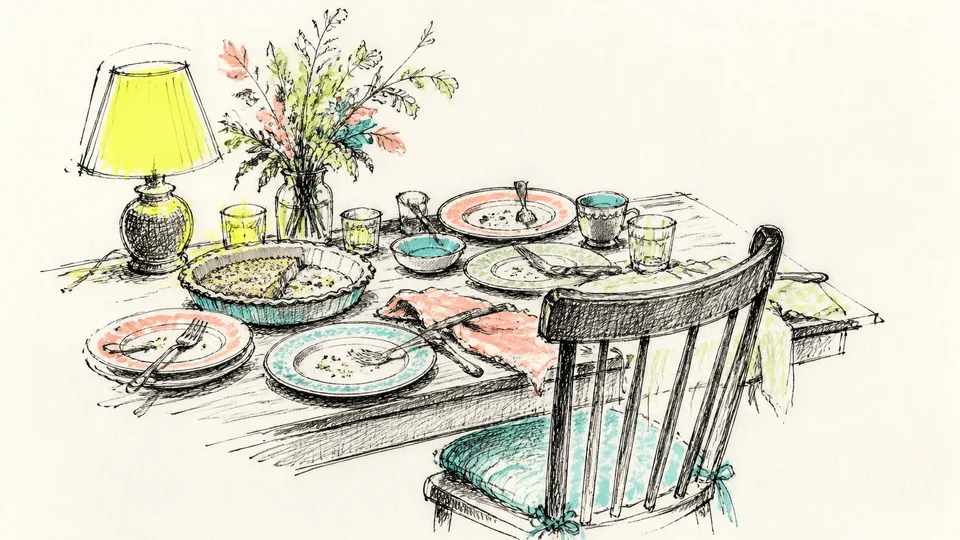
Thanksgiving can be a feast, a family visit, a quiet meal for one, or a day spent remembering people who are far away. The heart of the holiday is not a perfect table. It is the attention we give to what has carried us through another year.
These poems about Thanksgiving offer five original readings for a dinner, a classroom, a card, or a private note of thanks. Two sonnets bring a measured reflection, while a haiku, a ballad, and free verse keep the collection close to ordinary objects and real voices.
I have always found gratitude in the work around a meal. Someone washes greens, warms a roll, pulls a chair closer, or saves the last story for the person who arrived late. For another gentle collection about belonging, you may enjoy these poems about family and these poems about home.
Poems About Thanksgiving
The Table Gives Us Room
This Shakespearean sonnet uses an ABAB CDCD EFEF GG rhyme pattern. It treats the Thanksgiving table as a place that can hold different histories, unfinished conversations, and the quiet choice to make room.
The table wears the marks of many years,
A ring from heat, a scratch beside the bread,
It has received our laughter and our tears,
And held the words we wished we had not said.One chair is empty, one is pulled in near,
A child asks questions no one can ignore,
The room grows warm when listening is sincere,
And someone opens wide the waiting door.We bring our different weather to the room,
Our careful hopes, our stories out of tune,
Yet hands keep passing dishes through the gloom,
And turn a late November night to noon.A feast is more than what the plates can prove,
It is the space we make for one another's love.
Gratitude at Dawn
This haiku gathers Thanksgiving gratitude before the house grows busy. Its five, seven, five syllable pattern keeps the feeling small enough to notice in one breath.
Kettle hums at dawn
Sun warms the unset table
Thanks rise with the steam
The Work Beside the Feast
This Petrarchan sonnet begins with an ABBA ABBA octave and resolves through a six line sestet. It honors the people whose practical work makes a holiday welcoming without asking them to disappear behind the celebration.
Before the first guest comes, the kitchen sings,
A knife taps softly, onions meet the pan,
The careful hands prepare what kindness can,
And turn plain hours to bright remembering things.No trumpet names the quiet work it brings,
No plate can tell the whole of how it ran,
Yet every dish bears traces of a plan,
A dozen small accommodations of wings.I see the person wiping one more chair,
The child who sets the spoons in uneven rows,
The friend who brings a pie and leaves it there,
The tired host who still has room for those
Who need a place to rest their winter care,
And find that welcome is the gift that grows.
The Late Arrival
This ballad follows a person who arrives after the meal has started. Its song like movement keeps the humor gentle and lets the late guest discover that belonging is still waiting.
The late arrival hurried through the rain,
With one warm pie beneath a towel.
“I lost the road,” they said, “then found it again,”
And laughed beneath the porch light's glow.The turkey cooled, the children played,
The stories had begun.
Someone moved a chair beside the fire,
And said, “You made it. Come.”The pie was cut in generous slices,
The room grew bright and wide.
A missed beginning did not mean
The welcome had gone outside.
What I Can Carry
This free verse poem lists the modest gifts that remain after a gathering. Its open lines let gratitude move from food toward memory and care.
I can carry the sound
of a spoon against a bowl.I can carry the chair
someone pulled close.I can carry one story
told for the third time,
because the person telling it
still needs to be heard.I can carry the quiet
after everyone leaves,
when the house says,
We were here together.
A Thanksgiving That Is True Enough
Gratitude does not require a flawless family picture. A person may feel thankful and tired, joyful and lonely, relieved and uncertain on the same day. Honest poems leave room for all of those feelings without turning the holiday into a test.
Choose The Table Gives Us Room for a dinner reading. Gratitude at Dawn fits a short message, while The Work Beside the Feast honors a host or helper. The Late Arrival can bring a smile to a family gathering, and What I Can Carry suits a quiet note after the dishes are done.
If you share one of these poems, add a real detail from your table. Name the dish, the chair, the sound, or the person who made room. Specific gratitude feels more generous than a list of grand abstractions.
The holiday will end, and the table will be cleared. What remains is the practice of noticing who helped, who listened, and who stayed. That practice can travel with us long after the last candle goes out.
Useful cards for Thanksgiving thanks
Gratitude needs no special stationery. An existing card, folded paper, or personal message is enough; these blank cards are useful if you send several notes.
These are paid links. As an Amazon Associate I earn from qualifying purchases.
- View on Amazon
Seasons of Life blank note cards
Write a Thanksgiving poem with a specific thank-you to the host, helper, or friend who made room for you.
24 blank cards and white envelopes, four tree designs, 3½ × 4⅞ inches
Send a little poetry to someone you love.