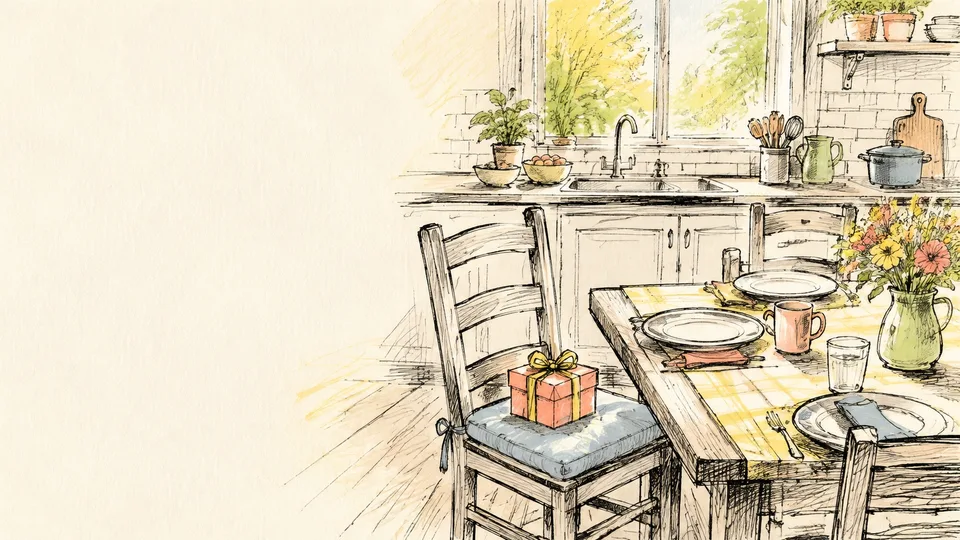

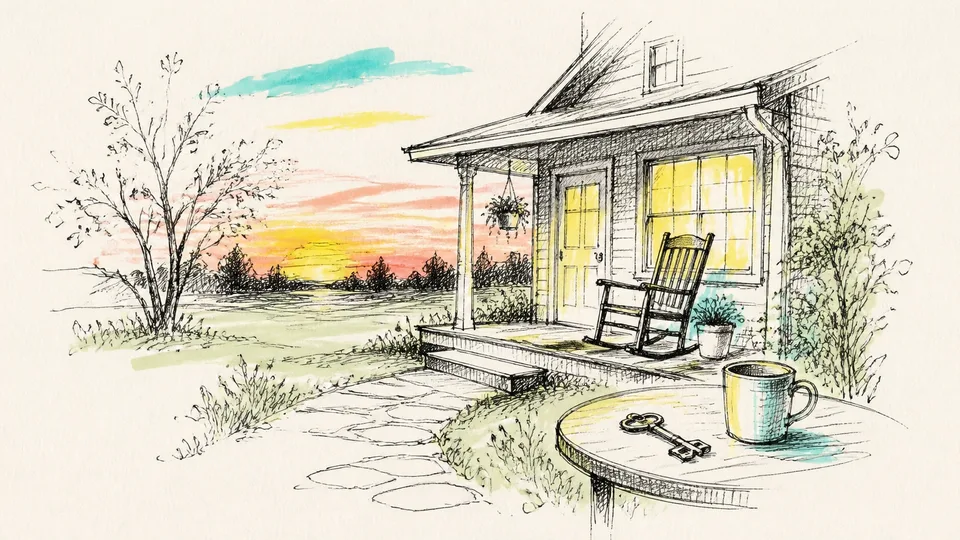
Home can be a house, a town, a room, a person, or a memory that knows how to welcome us. It may change address while keeping the same small rituals, such as coffee near the window, shoes by the door, or a light left on for someone coming late.
These poems about home include two sonnets, a villanelle, blank verse, and a haiku. They are for moving days, family gatherings, housewarmings, quiet evenings, and anyone wondering what makes belonging feel real.
I have lived long enough to know that a place becomes home through repetition and care. A porch learns our footsteps. A kitchen remembers the reach for a favorite cup. You may also enjoy these poems about family and these poems about a tree.
Poems About Home
The Light We Leave On
This Shakespearean sonnet follows an ABAB CDCD EFEF GG rhyme pattern. A porch light becomes a small promise of welcome, especially for the person who has been away or unsure where to return.
We leave one light beside the evening door,
A yellow circle on the waiting stone,
It does not know which footsteps it is for,
Yet makes the dark less difficult alone.The house has heard the weather cross the roof,
The kettle, laughter, footsteps, and the rain,
It keeps a quiet, practical kind of proof,
That ordinary care can still remain.A home is not the walls that shelter us,
Though walls can hold the echoes of our days,
It is the hand that makes a room less closed,
The voice that calls us in without a phrase.We leave the light, and in its patient glow
The road remembers where the loved ones go.
Home in a Pocket
This haiku places home inside a few portable objects. Its five, seven, five rhythm makes belonging small enough to carry while traveling.
Key warm in my hand
One stone from the creek bed rests
Home walks beside me
The Rooms We Carry
This second sonnet uses an ABBA ABBA octave and a six line resolution. It considers how a person can leave a house and still carry its sounds, habits, and forms of care.
I carry rooms that no one else can see,
A kitchen bright with weather after rain,
A hallway where a child repeated, “Again,”
A porch that taught the evening how to be.
The boxes closed, the old address grew free,
Yet every room remained inside the grain
Of habits made through joy and ordinary pain,
A map of what a place had given me.
I set my cup beside a different pane,
I learn the light, the floor, the nearest tree,
A home is built by care that comes again,
Not by the shape of one remembered key.
The rooms we carry open as we roam,
And make a little shelter where we come.
The House Says Come In
This villanelle uses nineteen lines, two repeating refrains, and two rhyming sounds. The repeated invitation makes home feel active, as though the house participates in the work of welcome.
The house says come in, the evening has grown cold.
A chair is waiting near the quiet flame.
The door can open wider than the old.
The floor remembers every step it told,
The window keeps a square of lantern flame.
The house says come in, the evening has grown cold.
A coat is hung, a story can be told,
A cup is filled, a tired hand can aim.
The door can open wider than the old.
No room is perfect, no welcome is gold,
Yet kindness makes a shelter from the same.
The house says come in, the evening has grown cold.
I leave one lamp where shadows start to fold,
And trust the light to carry on the name.
The door can open wider than the old.
The house says come in, the evening has grown cold.
The door can open wider than the old.
The Quiet Before Sleep
This blank verse poem follows a home settling at night. Its unrhymed, measured lines make quiet feel inhabited rather than empty.
The dishes wait beneath a folded cloth.
The hallway holds the warmth of recent talk.
I check the lock, then turn the kitchen light.
A house can breathe when all the voices rest.
The floor gives back one footstep and grows still.
Outside, the weather moves beyond the fence.
I place a book beside the waiting bed.
The room is small, but full of what I know.
I close my eyes and let the home remain.
Tomorrow, care will open it again.
The Work of Belonging
Home is not automatically safe or simple for every reader. These poems use ordinary rooms as images of care, but each person gets to decide which places and relationships deserve the word.
Use The Light We Leave On for a housewarming or welcome. Home in a Pocket suits a traveler, while The Rooms We Carry belongs to someone moving through a transition. The villanelle can open a gathering, and The Quiet Before Sleep fits a private evening.
If you share one of these poems, name a true home detail. Mention the porch, cup, key, window, or sound that tells you where you are. Specific objects let belonging remain personal.
Home is built again and again through small choices. Pull up a chair, make the room warmer, leave a light where it can be seen. A shelter becomes a home when care keeps returning.
Useful cards for a housewarming poem
A visit or handwritten message can be a welcome in itself. Reuse a card you have, or keep blank cards for housewarmings and moving-day notes.
These are paid links. As an Amazon Associate I earn from qualifying purchases.
- View on Amazon
Seasons of Life blank note cards
Write a welcome poem with a detail about the new home, neighborhood, or time you hope to spend together.
24 blank cards and white envelopes, four tree designs, 3½ × 4⅞ inches
Send a little poetry to someone you love.