

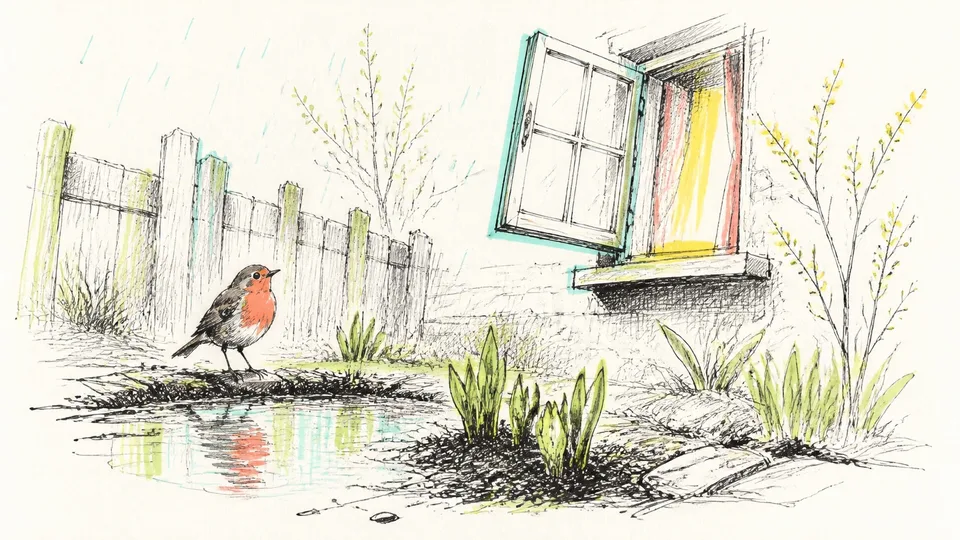
Spring does not arrive all at once. It begins in a softening patch of ground, a longer afternoon, or the first green point beneath a hedge. The season feels hopeful because it shows change happening slowly and visibly, one small return at a time.
These poems about spring include two sonnets, a ballad, blank verse, and a haiku. They are for garden notes, new beginnings, classroom readings, and anyone who needs a reminder that a dormant season is not the same as an empty one.
I have always loved the first day when a window can stay open a little longer. The air carries mud, leaves, and the possibility of work that will be worth doing. If you enjoy poems about seasonal change, you may also like these poems about summer time and these poems about a tree.
Poems About Spring
A Doorway Called Spring
This Shakespearean sonnet uses an ABAB CDCD EFEF GG rhyme pattern. The season becomes a doorway that opens gradually, allowing the speaker to step forward without pretending that winter never happened.
A warmer wind comes tapping at the pane,
The roof lets go a little line of snow,
One sparrow tries the unfinished song again,
And finds the notes are ready now to grow.The garden keeps the marks of frozen days,
A broken stem, a bed of flattened brown,
Yet underneath, the patient roots still raise
Their dark insistence through the warming ground.I take my coat and stand beside the door,
Not cured of every worry I have known,
But willing to believe in something more,
A green beginning I can call my own.Spring does not ask the past to disappear,
It opens one more doorway through the year.
The Robin's Return
This ballad tells the story of a robin that visits the same yard each spring. Its song like movement follows a child who learns that returning can be a form of courage.
The robin came when frost was thin,
And hopped beside the gate.
The child looked out and let him in
Through memory, not a slate.“You found the yard,” the child said low,
“Though winter changed the view.”
The robin tilted down to show
The world was changing too.Each year the nest, each year the song,
Each year the careful flight.
The child grew brave by waiting long
For one more morning light.
The Green Return
This second sonnet follows a Petrarchan ABBA ABBA octave and a six line resolution. It treats spring as a return that includes the scars and lessons of the colder months.
The green return begins beneath the snow,
A thread too small to catch the waiting eye,
It gathers rain and learns the shape of sky,
Then lifts a leaf where buried roots can go.The winter did not teach the seed to show
Its hidden work, nor ask the dark to lie,
It simply made a room where roots could try,
And kept the warmth the sleeping things would know.I think of times I thought I had been still,
When I was changing in a quiet way,
Preparing for a task, a love, a will,
That could not rise until its proper day.The first small leaf is enough proof for me,
A life may start before it looks like tree.
The Work of Thawing
This blank verse poem follows a walk beside melting snow. Its steady unrhymed lines honor the slow practical work of spring rather than treating it as a sudden miracle.
The ditch is full of water from the hill.
A glove lies dark beside the garden wall.
The ground gives back the stones we left in fall.
I clear a path, then stop to watch it shine.
The cold still holds the shadows of the porch.
Yet underneath, the worms have started work.
A bud is tight against the branch and waits.
The season does not hurry what it knows.
I carry one small shovel to the shed.
The thaw has made enough work for today.
Green Tips
This haiku keeps the first signs of spring close to the ground. Its five, seven, five rhythm gives a small promise without making the season sound finished.
Green tips break the brown
Rain taps softly on the fence
Robins search the yard
Beginning Again in Small Ways
Spring can encourage us without demanding cheerfulness. It shows that a person may begin again while still carrying winter's evidence. The important work is often quiet, such as clearing a path, opening a window, or trusting one small green tip.
Choose A Doorway Called Spring for a reading about transition. The Robin's Return is friendly for children, while The Green Return suits someone who has been changing in private. The blank verse poem belongs to a garden task, and Green Tips can fit a short note or caption.
If you share one of these poems, include the first sign of spring that you truly noticed. Tell the reader where the rain gathered or which bird returned. A specific observation makes hope feel sturdy rather than decorative.
The season will keep opening in its own rhythm. We can meet it with a little patience, a little work, and a willingness to notice what has begun before it is large enough to be called a success.
Useful supplies for spring planting
Borrow tools or use the garden supplies you own. For adults taking up the planting described here, a small hand tool can be enough to begin.
These are paid links. As an Amazon Associate I earn from qualifying purchases.
- View on Amazon
Fiskars Ergo Garden Trowel
Use a hand trowel for a small spring planting, then jot down what has begun to grow in the garden.
One garden hand trowel
Send a little poetry to someone you love.