

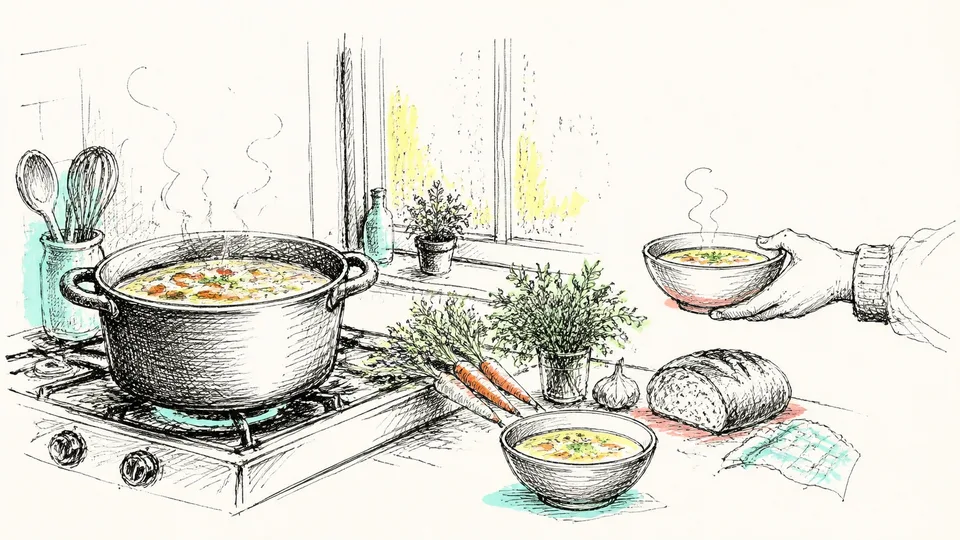
Soup is patient food. It gathers vegetables, beans, herbs, broth, and time into one warm pot. It can be made for a crowd, carried to a neighbor, or eaten alone while the weather presses against the window.
These poems about soup include two sonnets, a ballad, a haiku, and free verse. They are for cooks, caregivers, families, and anyone who understands that comfort often arrives in a bowl held between two hands.
I have always liked meals that leave room for improvisation. A soup can welcome the last carrot, the extra bean, or the herb growing by the back step. For another collection about ordinary comfort, you may enjoy these poems about coffee and these poems about home.
Poems About Soup
The Pot on the Stove
This Shakespearean sonnet uses an ABAB CDCD EFEF GG rhyme pattern. The pot becomes a quiet center of the house, bringing separate ingredients and separate people into one shared warmth.
The pot on the stove keeps singing through the rain,
A carrot turns, a bean gives up its gold,
The steam writes circles on the window pane,
And warms the hands that have begun to hold.No single spice can claim the whole of taste,
The broth receives what every garden sends,
A little salt can rescue what we waste,
A patient simmer teaches food to mend.I think of people gathered in the room,
Each carrying a weather of their own,
Yet finding space beside the kitchen's bloom,
And leaving with a warmth they did not own.The soup grows rich by making room for all,
A gentle answer to the hungry call.
The Soup for a Rainy Day
This ballad follows a bowl of soup carried down a rainy street. Its song like movement makes the meal a small act of neighborly care.
The rain came down on Maple Street,
The gutters sang all day.
A woman filled a lidded bowl,
Then wrapped it up in gray.She crossed the road, she climbed the steps,
She knocked beside the light.
“I made too much,” she said with care,
“So share this bowl tonight.”The neighbor smiled, the steam rose up,
The storm kept making noise.
One warm meal crossed the weather line,
And gave the evening voice.
The Recipe of Enough
This second sonnet uses an ABBA ABBA octave and a six line resolution. It considers enoughness through a soup that does not need expensive ingredients to become generous.
A recipe of enough begins with less,
One onion, one old bean, a little thyme,
The things that wait beyond their freshest prime,
And hands that know the virtue of a mess.The pot does not require a grand address,
It welcomes what the pantry has in time,
Then lets the slow heat make a common rhyme,
A fragrant answer to an empty yes.
We learn that plenty is not always more,
It is the bowl passed gently down the line,
The seat pulled close, the open kitchen door,
The broth divided so the last can dine.A humble meal can hold a noble art,
To feed the body and the waiting heart.
Steam on the Window
This haiku notices soup through its effect on a kitchen window. Its five, seven, five syllable pattern keeps the comfort close to sight and breath.
Steam clouds the window
Carrots brighten the dark pot
Rain taps out a tune
What the Bowl Remembers
This free verse poem lets a bowl hold layers of family and work. Its open lines follow the meal from preparation to the quiet after eating.
The bowl remembers
the hand that stirred,
the child who asked for more,
the neighbor who took one home.It remembers a spoon
left in the sink,
a little parsley on the rim,
and the sentence,
“You look tired. Sit down.”
Comfort That Can Be Shared
Soup is not magic, but it is direct. It warms the hands, gives the body something useful, and creates a reason to sit. That is sometimes enough to begin a better hour.
Use The Pot on the Stove for a family or kitchen reading. The Soup for a Rainy Day suits a thank you to a neighbor, while The Recipe of Enough belongs to a reflection on generosity. The haiku fits a recipe card, and What the Bowl Remembers can accompany a meal shared with care.
If you share one of these poems, name the ingredient that belongs to your kitchen. Tell the reader who stirred, who carried, or who took the last bowl. Small details make comfort believable.
The pot will cool, and the dishes will be washed. Still, the warmth may remain in the person who was fed and the person who remembered to offer food. Make what you can, share what you have, and let the evening simmer gently.
Useful supplies for serving and sharing soup
Use your usual pot, spoon, and recipe. These optional supplies help with serving the meal or passing a recipe to a neighbor.
These are paid links. As an Amazon Associate I earn from qualifying purchases.
- View on Amazon
OXO Good Grips Silicone Everyday Ladle
Ladle soup into bowls from the pot, including cookware where you prefer a silicone utensil.
One silicone ladle, Peppercorn color
- View on Amazon
Oxford Heavyweight Ruled Index Cards
Write down the ingredients and method for a soup you are sharing, with a short verse on a separate card if you like.
100 white cards, 3 × 5 inches
Send a little poetry to someone you love.