
Poems about night often turn toward sleep, but the world after dark has other things to do. A bakery measures flour before dawn. A bus carries a few late passengers past reflected windows. A returned book waits in a quiet slot for the building to open again.
I wanted these seven original poems to notice that continuing life. The speakers move through imagined streets and a field beyond the lamps. Some scenes are companionable, some solitary, and one is simply a moth investigating the wrong kind of brightness. Night can have several moods without becoming only a symbol for one feeling.
The collection has two sonnets, a brief story, a tiny haiku, and other forms that change the reading pace. There is work here, along with the small sights someone might catch while going home. I especially like the details that reveal a useful day already beginning while most of the neighborhood is still quiet.
If your interest is the threshold between waking and rest, the poems about sleep stay closer to that subject. Here, the street remains open for another kind of attention. A wheel turns, a light comes on, and the dark holds more activity than the daytime glance may have expected.
The poems
The Bakery at Four
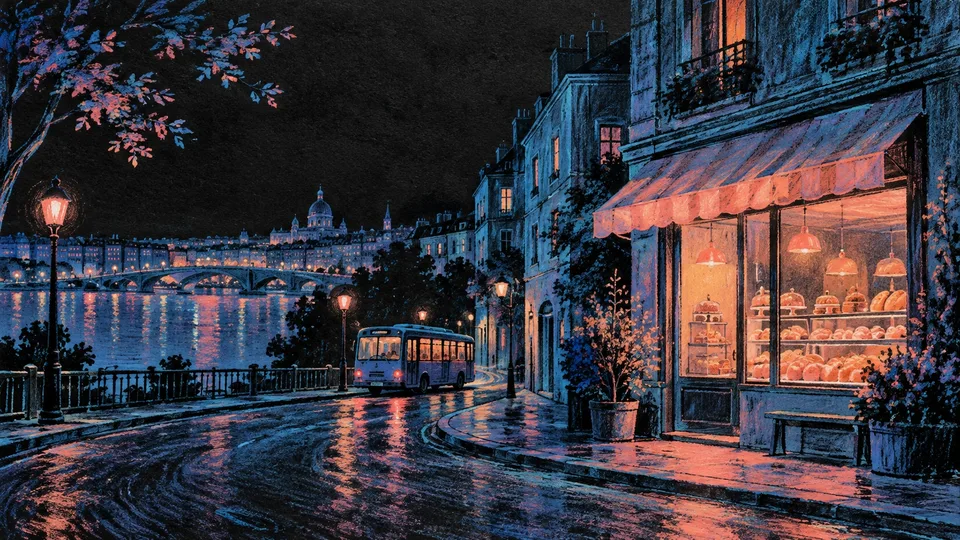
The flour on the floor makes this early scene feel real to me. I like the thought that the bright window is both a lovely sight and evidence of someone's ordinary work.
At four, the bakery opens up its light;
A square of gold falls out upon the street.
The flour on the floor is pale and white;
A tray slides home, its edges ringing neat.
The town has not begun to ask for bread;
Its windows hold their curtains close and still.
But dough is turned, and cloth is gently spread,
And someone checks the measure for the till.
The night is not an empty pause between
The useful hours a passing clock can show.
A quiet trade is working, still unseen,
To make the coming morning rise and grow.
I pass the glass and see the patient art
Of one day's ending give the next its start.
Windows on the Late Bus
The reflection lets the bus carry its passengers through two streets at once. I like the moment when a tired person's face briefly seems to be looking out of somebody else's house.
The bus window borrows
a row of houses.My face appears
inside a stranger's kitchen light,
then drifts through a closed shop,
then vanishes in a patch of trees.Across the aisle,
someone holds a wrapped bouquet
upright through every turn.We carry our separate evenings
past the same dark glass.
A Moth at the Glass
The moth makes a small, restless contrast with the street's quiet work. I like that the light can be a useful window to one creature and a puzzling obstacle to another.
Moth at the lit pane,
Soft wings brush a square of gold.
The room stays beyond.
The Last Returned Book
The book arriving after closing makes me think of all the quiet errands a town never sees. I like the soft thump as a tiny ending to a very long day.
The library had closed its doors;
The clock had struck the hour.
A bicycle came through the square
Beside the dark clock tower.A book went through the narrow slot
And landed out of sight.
The rider listened for the thump,
Then clicked the cycle light.The rider clipped the empty bag
And pedaled toward the square.
The book was home; the morning staff
Would find it waiting there.
The Street Sweeper
The clean curve behind the brushes is the part I notice first. I like the poem's attention to a task that can be easy to overlook once the daylight crowd arrives.
The sweeper follows slowly down the street;
Its brushes turn the gutter's scattered leaves.
A steady sound unfolds its moving beat
Beneath the sleeping houses and their eaves.
A paper cup rolls once, then disappears;
A narrow, cleaner curve is left behind.
The work moves on through unremarked small years,
Through things a passing glance may never find.
By noon, the street will fill with hurried feet;
No one will stop to ask how it was made
A little less encumbered, clean and neat,
Or name the patient labor in the shade.
Tonight I watch the brushes turn and sweep,
And mark the work that happens while we sleep.
A Field Beyond the Lamps
Leaving the streetlights changes the scale of the scene. I like the few seconds it takes for the eye to find the fence and hedge again.
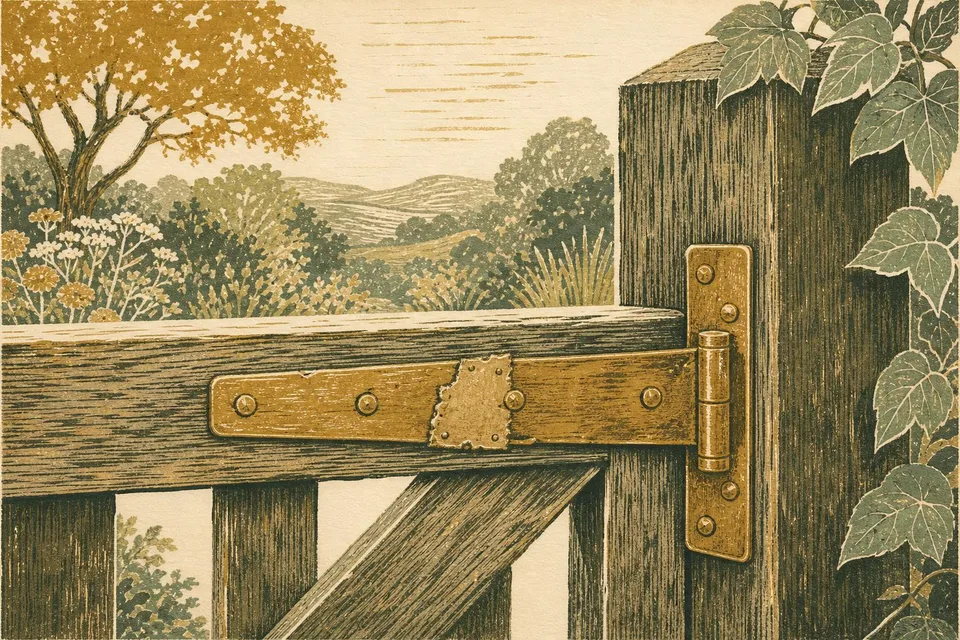
Beyond the final lamp, the field grows wide.
At first I see no edges in the dark.
Then fence posts gather slowly into view,
A hedge returns, a gate receives its shape.
The town is still a brightness at my back.
A little wind moves through the unseen grass.
I stand until my eyes have learned the place,
Then turn toward the road that takes me home.
Somebody Keeps a Light Tonight
The repeated light belongs to several different people, which makes the poem feel communal to me. I like ending with the neighborhood's continuing life rather than one solitary window.
Somebody keeps a light tonight.
A baker starts another day.
The dark still holds a place for light.A bus turns slowly out of sight;
Its final riders drift away.
Somebody keeps a light tonight.A book returns without a fight
To shelves that wait in quiet gray.
The dark still holds a place for light.The sweeping brushes follow white
Small scraps that found the gutter's way.
Somebody keeps a light tonight.A distant window makes a bright
And patient square above the bay.
The dark still holds a place for light.The town turns softly toward the white
First edge of its approaching day.
Somebody keeps a light tonight.
The dark still holds a place for light.
A few words to carry with you
The street after dark can look empty until a little movement catches the eye. A turning brush, a bus window, or the opening of a bakery changes that impression. The neighborhood is resting in some places and working in others, with many separate hours held inside the same night.
That is the thread joining these poems. Their scenes are inventions, but the attention they ask for is ordinary: look at what is continuing, and at the people whose work may be easy to miss. A glowing window can be beautiful and practical at the same time.
For a quick reading, the moth poem leaves a small clear image. The library ballad has a little narrative to follow, while the bakery and street sweeper sonnets give their tasks a longer look. The field poem steps beyond the lamps and lets the eye adjust before returning home.
Read the repeating final lines slowly if you can. Each return puts the light in a slightly different place, much as a walk through a neighborhood reveals one window after another. The repetition is meant to gather the separate scenes without making them identical.
I like leaving the collection just before morning. The first customers have not arrived, and the bread has not yet left the trays. Somebody has already been doing the work that the next part of the day will take for granted.
For reading after dark
Nothing here is needed to enjoy these poems. If the night is your favorite time to read or wander, these may suit you.
These are paid links. As an Amazon Associate I earn from qualifying purchases.
- View on Amazon
Gritin Rechargeable Book Light
Read these poems in bed with this small rechargeable light.
One 9 LED light
- View on Amazon
National Geographic Backyard Guide to the Night Sky
Take this guide outside and find what the poems only suggest.
One book
Send a little poetry to someone you love.