

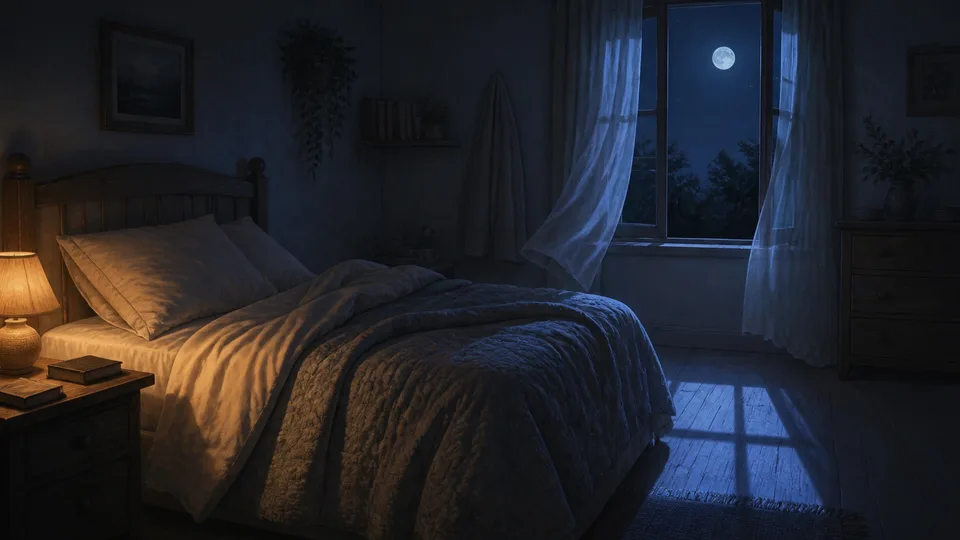
Sleep is both ordinary and mysterious. We prepare for it with familiar motions, turning off a lamp, setting down a book, smoothing a pillow, or listening as the house changes its voice. Then we release the day without knowing exactly when wakefulness will become dreaming.
These poems about sleep explore more than peaceful rest. One poem sits with a wakeful night, another listens to the quiet of people resting under one roof, and another follows a dream that disappears at morning. Sleep is not equally easy for everyone, so these verses do not offer instructions or promises. They offer images, patience, and company.
Night can make a worry feel larger because fewer things compete for our attention. A thought that seemed manageable at noon may echo after midnight. At the same time, darkness can soften the edges of a busy home and invite us to stop solving what cannot be solved tonight.
If you want to send a gentle evening message to someone you care about, these goodnight poems for a friend may help. For a broader reflection on rest, difficult days, and new mornings, you might also visit these do not give up poems.
Poems About Sleep
The House Lowers Its Voice
Every home has a different night sound. This poem hears the softening of rooms as doors close and footsteps slow. Rest begins as a change in attention before sleep arrives.
The dishes settle in the rack,
The hallway loses light.
The old floor keeps one quiet creak,
Then gives the house to night.A faucet sighs, a curtain stirs,
The clock speaks soft and deep.
The rooms lower their busy voice
And make a place for sleep.
Pillow Full of Day
Sometimes the mind carries every conversation into bed. This poem imagines the pillow holding the crowded remains of a day until they begin to loosen. It is about permission to pause, not a guarantee of quick sleep.
My pillow holds the words I said,
The words I should have known,
The list unfinished on the desk,
The worry on the phone.I cannot mend them all tonight,
Or make tomorrow clear.
I set them softly by the dark,
And let my breath stay near.
Awake at Two
A wakeful night can feel lonely even in a familiar room. This poem notices small signs that the world continues beyond the window. Its companionship is quiet and undemanding.
At two the ceiling holds the dark,
The blanket warms my feet.
A distant car moves through the rain,
One branch taps out a beat.I am not wrong for waking here,
The night is wide, not bare.
Somewhere an owl attends the trees,
And morning waits somewhere.
The Dream That Left No Name
Some dreams vanish before we can describe them. This poem keeps only a color, a doorway, and a feeling from one such journey. What disappears may still leave a gentle trace.
I walked beside a silver field,
I opened one blue door.
A voice I almost recognized
Was singing from the shore.At dawn the pictures slipped away,
Their names were lost from view.
But all that morning, in my chest,
A quiet wonder grew.
Morning Finds the Pillow
The final poem welcomes light without judging how well the night went. Morning arrives for the rested and the weary alike. The speaker begins with kindness toward the body that carried them through.
Morning finds the folded sheet,
The hollow where I lay.
It pours a stripe across the quilt
And asks me toward the day.Whether sleep was deep or shy,
The window gathers blue.
I thank the night for what it gave,
Then start with what is true.
A Gentle Way to Read These Poems
Bedtime writing should not become another task to complete correctly. You can read one poem and leave the others for another evening. You can copy a stanza into a note, share it with someone who is awake, or simply let one image settle beside you. There is no prize for reaching the final line.
The House Lowers Its Voice may suit a family home at the end of a full day. Pillow Full of Day is for the nights when unfinished thoughts gather close. Awake at Two offers a small reminder that wakefulness is part of many human nights, even when it feels private. Morning Finds the Pillow begins again without grading the hours before it.
If sleep is often difficult or distressing, a poem is companionship, not professional care. It is reasonable to seek help from someone qualified and trusted. Gentle language can sit beside that care, but it should never pretend to replace it.
Night after night, we practice releasing what the day has placed in our hands. Some nights the release comes easily, and some nights it does not. Still, the lamp can be lowered, the room can grow quiet, and the next breath can be met without demand. I hope these poems make that quiet feel a little less empty and the coming morning a little more kind.
Send a little poetry to someone you love.