
A name can be a welcome, a family story, a private joke, or a sound that helps someone find their way back to a room. It may carry history, but it does not have to carry every expectation attached to it.
These poems about names include two sonnets, a ballad, free verse, and a limerick. They are for a naming celebration, a family memory, a classroom, or anyone thinking about the tenderness of being addressed with care.
I remember how children brighten when a teacher learns the exact shape of their name. That small effort says, “You belong in this room.” If you enjoy poems about reading and language, you may also like these poems about books and these poems about inspiration.
Poems About Names
The Name at the Door
This Shakespearean sonnet uses an ABAB CDCD EFEF GG rhyme pattern. It follows a name being spoken at the door and turns toward the way recognition can make an ordinary arrival feel like home.
A name is spoken softly through the door,
The sound has traveled farther than the rain,
It finds the child who waited on the floor,
And brings a familiar welcome back again.A name can hold a grandmother's old tune,
A father's hope, a question left to grow,
A word that changes shape beneath the moon,
Yet stays a place the living heart can know.I speak it not to claim what it must be,
But to invite the person standing near,
The name is theirs, and they are still set free,
To fill its sound with every coming year.The truest name is spoken with respect,
And leaves the person room to self select.
The Substitute Teacher's List
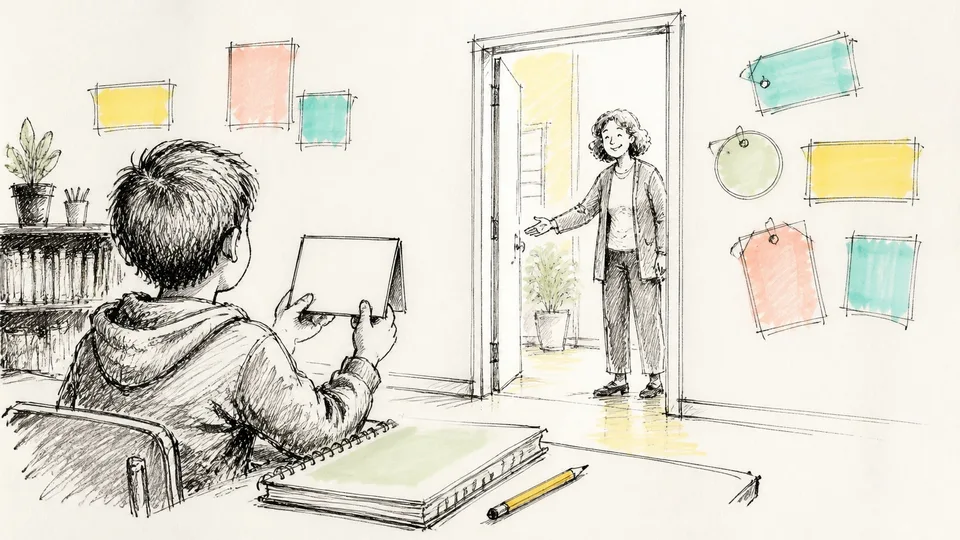
This ballad tells a classroom story about a teacher who takes time to learn unfamiliar names. Its song like movement keeps the focus on patience and the relief of being welcomed.
The list was long, the morning bright,
The names were new to me.
I asked each child to say it once,
Then twice, so I could see.One child looked down, another smiled,
A third corrected my tone.
I wrote the sounds beside the names,
And made the page my own.By afternoon, the room had changed,
The chairs were still the same.
But every voice rose more at ease
When I could speak its name.
What a Name Can Carry
This Petrarchan sonnet begins with an ABBA ABBA octave and resolves through a six line sestet. It honors inherited names while allowing each person to make the word their own.
A name can carry rivers, fields, and rain,
A letter saved inside a wooden box,
The sound of someone turning garden locks,
The old pronunciation of a lane.Yet no one is a vessel for the chain
Of every hope that family history stocks,
A name can open doors and still unknots
The thread that says a life must stay the same.
I write my name and let the ink be mine,
I keep what fits, release what does not serve,
The past can be a root, not a design,
A place to stand while choosing what I curve.The word begins a story, not its end,
It grows each time we speak it as a friend.
In the Margin
This free verse poem treats a name in a book margin as a trace of attention. Its loose lines make room for the difference between ownership and loving witness.
Someone wrote a name
beside the paragraph.The ink has faded,
but the care has not.I do not know the person
who held this book.Still, I turn the page slowly,
as if their name
might be waiting to be heard.
The Name That Would Not Fit
This limerick uses five lines and an AABBA rhyme pattern. Its playful speaker finds that a long name can be a little inconvenient and still be wonderfully memorable.
There once was a name long and grand,
It needed two lines when it was planned.
The clerk took a breath,
Then laughed to the left,
And wrote it with both feet and hand.
Speaking with Care
Names are not puzzles for other people to solve quickly. They are part of how a person is recognized, and learning to say one correctly can be a small act of respect. The effort matters even when we need to keep practicing.
Choose The Name at the Door for a welcome or family reading. The Substitute Teacher's List fits an education setting, while What a Name Can Carry belongs to a naming celebration or a personal reflection. The free verse poem suits a reader, and the limerick can lighten a gathering.
If you share one of these poems, use the name of a real person only with their permission. Add the detail they want remembered, not the story you assume belongs to them. Care begins with listening.
A name can change, deepen, or become newly understood over time. The kindest thing we can do is keep learning the person who stands inside the word. Speak with care, and leave room for the life to continue.
Send a little poetry to someone you love.