
Sometimes love sounds like a question asked twice because we were busy the first time. Sometimes it looks like the chair we pull closer, the toast we cut, or the message we answer after supper. Loving our children is a large feeling that spends much of its life in small, ordinary actions.
These seven poems about loving your children offer words for that everyday devotion. They move from listening to a winding childhood story to respecting the choices of a grown child. There is room for laughter, too, because affection often arrives wearing a saucepan for a hat.
You might be looking for something to put in a birthday card, tuck beside a lunch, or send to someone who no longer lives down the hall. You might simply want a poem that recognizes how deeply you care without making the feeling sound grander or tidier than it is.
I am especially drawn to the difference between loving a child and deciding who that child must become. A parent can offer steadiness while still learning to listen. The smallest details in these poems matter to me because they give that generous idea something we can see and hear.
Some selections are brief enough for a note. Others benefit from being read slowly, perhaps aloud. Choose the one that sounds most like your relationship, whether that means a shared joke, a quiet promise, or the pleasure of hearing about a life taking its own shape.
Seven Poems About Loving Your Children Through Everyday Changes
The Story Before Supper
The fallen sock is the detail I keep coming back to, because nothing important happens to it while the parent listens. I like that small surrender of efficiency, especially when a child needs time to find the next word.
I set the folded washing on the chair
And leave the fallen sock upon the floor.
You tell me of a beetle on the stair
Whose shiny back you watched beside the door.The clock above the sink is never slow;
It ticks beneath your story of the sun.
You ask me things I do not always know;
I stay to hear you tell what it has done.Your tale forgets the beetle for a kite
Then finds a dog that barked beside a tree.
I need not set its wandering pieces right;
You turn to find me listening to see.The washing waits until your tale is through.
For now, I have this little while with you.
The Royal Toast
A saucepan crown makes me smile before the royal announcement even begins. What I enjoy most is the parent's willingness to join the game, giving an ordinary breakfast a ceremony of its own.
My child wore a saucepan for a crown
And ruled from a chair in a gown.
I bowed to the toast
That most noble host
Then helped bring the royal crumbs down.
A Room You Chose
I find the blue walls reassuring because the parent does not need to have chosen them. The affection here makes space for an adult child's preferences, and the invitation at the end feels warmer for being freely offered.
You tell me that you've painted one room blue
And found a little table for the hall.
I try to see the place described by you
The afternoon that settles on its wall.I might have picked a different shade of green
Or put the little table by the stair.
But yours are windows I have never seen;
You know the way the daylight gathers there.So tell me where you like to sit and read
And what you see beyond the kitchen pane.
I need not be the voice in every deed
Or draw your road to bring you home again.Your life is yours, and still you let me hear:
Come see the blue. There is a welcome here.
What the Pocket Holds
The offered pebble feels important to me precisely because it has no grand value. I like the pause before the parent accepts it, a small chance to recognize what the child has chosen to share.
Small stones fill your coat.
You choose one for me to keep.
I hold out my hand.
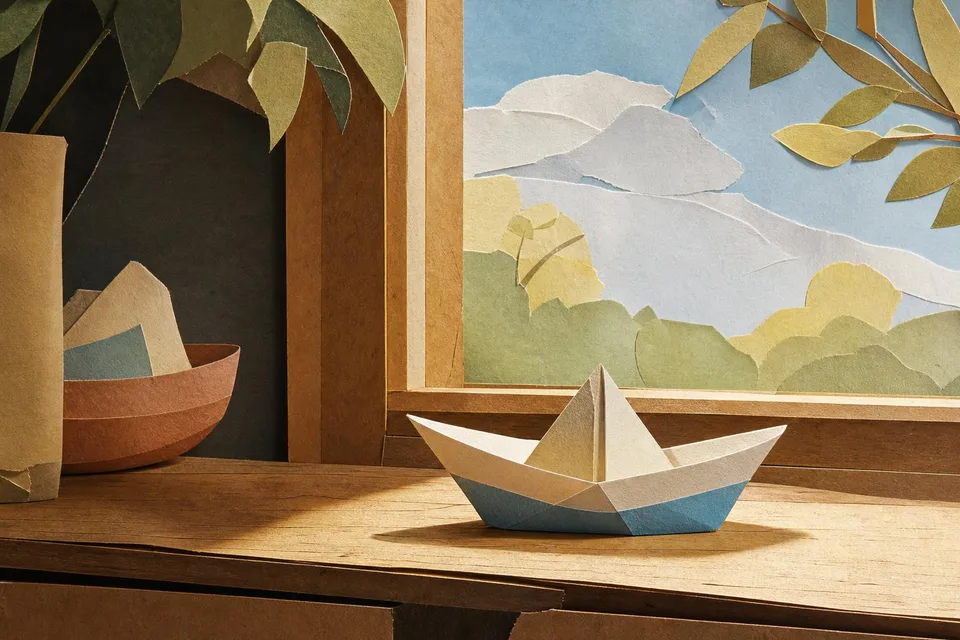
The Saturday Boat
The second sheet of paper is my favorite part of this little story. Instead of taking over the folding, the parent offers company, which can be a loving answer when a first attempt goes wrong.
We folded paper by the sink
To make a boat that day.
You carried yours into the yard
To watch it sail away.The puddle caught its pointed bow;
The paper drank the rain.
You brought the dripping boat to me
And smoothed it flat again.I found another sheet for you
And took one for my own.
We worked beside the kitchen light;
You would not fold alone.The next boat leaned a little left
But floated past a stone.
You called for me to come and look:
It sailed there on its own.
No Prize Required
The paper without a golden star gives this promise somewhere familiar to land. I value the distinction between celebrating a child's effort and making affection feel like another thing that must be earned.
You need not earn the love I give today.
Bring home the page without a star tonight.
There is no prize that takes this love away.Tell me the words you could not find to say;
We have a little time before the light.
You need not earn the love I give today.The game is done; the pieces put away.
You do not have to make the losing right.
There is no prize that takes this love away.Some afternoons refuse to go our way;
The cupboard door will stick however tight.
You need not earn the love I give today.Let other people count and weigh and pay;
Your place is not a score for them to write.
There is no prize that takes this love away.Come sit beside me. You are free to stay
Without a speech to make the evening bright.
You need not earn the love I give today.
There is no prize that takes this love away.
Tell Me the Small Things
I like the grocery bag with its broken handle because it gives a distant conversation the texture of a real day. Not every call needs an announcement, and this poem makes a place for the details someone might otherwise leave out.
Tell me about the grocery bag
that lost its handle
three steps from your door.Tell me whether the apples rolled
and who helped you gather them.You do not need good news
ready in a neat stack
before you call.I want to hear
which window catches the rain
what you made for supper
whether the borrowed umbrella
ever found its way back.These are not the things
I am waiting to get past.They are where you live.
Tell me.
Love That Pays Attention
What stays with me across these poems is how often love involves making a little room. The washing can wait. Another sheet of paper can be found. A conversation can wander through groceries and weather without needing to arrive at an important announcement. Attention gives ordinary moments their particular warmth.
If you are choosing a poem for a young child, consider reading it together before putting it in a keepsake box. The saucepan crown might invite a laugh, while the pebble offers a quieter moment. A child may notice something entirely different from the detail that first caught your attention.
For an older or grown child, a short accompanying sentence can make the gift more personal. You might mention the color they chose for a room or thank them for a recent conversation. There is no need to explain every line. Let the poem offer its thought without asking for a particular response.
I also think it matters that these poems leave perfection out of the bargain. Children do not always have cheerful stories, and parents do not always listen as well as they intend. A loving relationship can include another try: putting something down, asking again, or admitting that we missed what was being said.
Perhaps the most useful next step is not to save a poem for an occasion at all. Send one on an ordinary afternoon, or read it when the house has settled. Then leave space for whatever comes back, a joke, a memory, a small account of supper. Love can be plainly spoken and still have plenty left to hear.
For another collection, visit Poems About Family: Original Verses for Home, Memory, and Belonging or Valentine’s Day Poems From Parent to Child: Love for Every Growing Year.
Books for sharing your love with your children
Nothing needs buying to share these poems with your children. If you would like a companion book, these offer another way to spend a little time together and say what is in your heart.
These are paid links. As an Amazon Associate I earn from qualifying purchases.
- View on Amazon
The Wonderful Things You Will Be
Read this rhyming celebration of parental love alongside the poems about giving children room to grow into themselves.
One hardcover book
- View on Amazon
I Wish You More
Pair its wishes for laughter, wonder, and love with a favorite poem, then tell your child one hope you hold for their future.
One hardcover book
Send a little poetry to someone you love.