

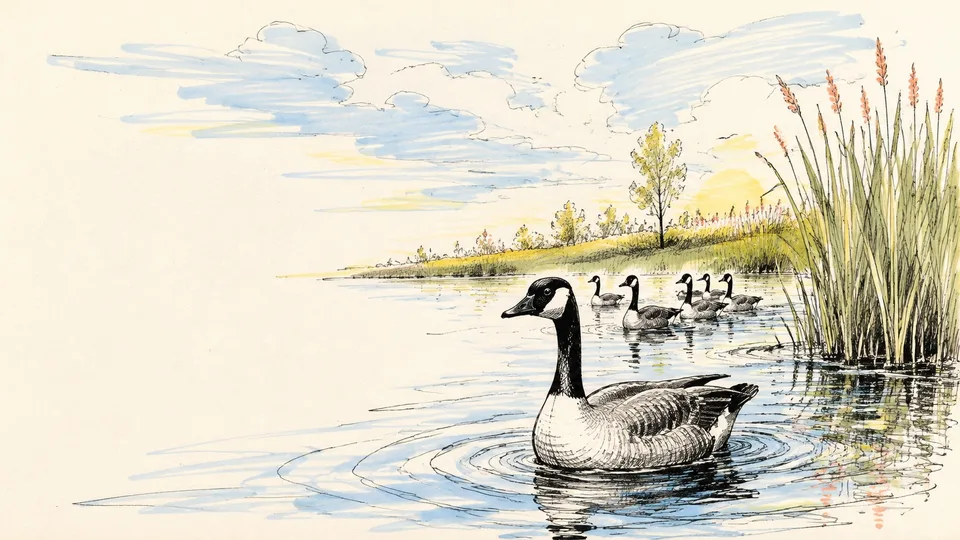
Geese are not shy about announcing themselves. They cross a pond with purpose, gather in a field, and turn a quiet morning into a conversation that seems to include the whole sky. Their confidence can be funny, but it can also remind us that a life does not have to be delicate to be beautiful.
These poems about geese follow the birds through ponds, gardens, autumn air, and wide blue distance. The collection includes two sonnets, a haiku, a ballad, and free verse. Some poems are playful. Others notice the patience of a flock moving together and the courage of a single bird finding its place.
I like animals that make it difficult to stay lost in thought. A goose can interrupt a polished idea with one loud call and send the mind back to the weather, the water, and the day at hand. That interruption feels useful to me. It is hard to be too solemn when a bird is walking across the grass as if it owns the afternoon.
If you are writing for a child, a nature lover, a teacher, or someone who needs a little laughter, choose the poem with the right amount of wobble. These poems about the sky offer a wider view, while these poems about summer time stay close to weather and outdoor memory. I hope the collection sends you outside with your eyes open.
Poems About Geese and the Wide Open Day
Geese Cross the Blue Lake
The haiku begins with sound because geese rarely let the scene remain silent. I like the last line’s gentle humor, since even a serious morning can learn to laugh. This is a good little poem for a nature notebook, a child’s reading time, or a note to someone who enjoys birds.
Haiku
Geese cross the blue lake
Their honks wake the sleeping reeds
Morning learns to laugh
The Geese at the Garden Gate
The ballad lets the geese become comic neighbors without making them foolish. I enjoy the confident march toward the garden, followed by the gardener’s decision to share the path. This poem may help a reader who wants a light verse about the animals that turn an ordinary chore into a story.
Ballad
At sunrise by the garden gate, the geese arrived in four,
They crossed the path with serious steps and claimed the open door.
The gardener stood with hands on hips and watched them lead the way,
While every flower lifted up its face to greet the day.One goose inspected every row, one paused beside the thyme,
One looked as if the whole wide yard belonged to it by right.
The fourth gave one emphatic call, then settled near the stone,
As if to say the garden was a place they all had known.The gate stood open, morning warmed the leaves with drops of dew,
The gardener laughed and moved the chair, making a little room.
Some visitors arrive with grace, some arrive with noise,
But even loud and feathered guests can bring a day its joys.
A V in the Sky
This sonnet looks up from one noisy pond to the larger pattern of shared direction. I notice the one goose that turns back, because belonging does not always mean moving in perfect unison. The poem may help anyone who needs both community and permission to take a slightly different path.
Shakespearean sonnet
A V of wings moves slowly through the blue,
The pond below reflects a silver sound,
Each bird appears to know what birds must do,
Yet one turns back to investigate the ground.
The wind lifts every feather into song,
The reeds lean close, then straighten in the sun,
A goose can make a quiet morning long,
By calling all the listening world to run.
I watch them cross the widening afternoon,
With work and wonder folded in their flight,
The sky becomes a moving silver tune,
That carries ordinary thoughts to light.
If joy can honk and wobble, let it be,
A bright and noisy blessing over me.
At the Pond
The free verse poem stays with the moment after the flock has passed. I like the sudden quiet because it shows how much presence the geese carried with them. This may be useful for a reader who wants a short nature poem that ends in attention rather than a punchline.
Free verse
The geese leave ripples
on the pond.For a moment
the reeds keep listening.Then the water settles,
the path returns to grass,
and the sky becomes enormous again.I stand there longer than I planned,
grateful for the interruption,
grateful for the quiet
that follows a good loud life.
The Long Way South
The second sonnet lets migration become a picture of carrying home while moving forward. I like the line about weather, rest, and rain because it refuses to make the road sound simple. This poem may speak to anyone who is leaving one season while keeping its love in view.
Shakespearean sonnet
The pond grows dark beneath the autumn star,
The grass holds drops that shine like bits of glass,
A flock calls out and gathers from afar,
Then lifts above the reeds and lets me pass.
I think of all the places hearts can roam,
Of leaving fields while keeping love in view,
Of carrying the shape of one old home
Into a sky that offers something new.
The road is not a line that must be straight,
It bends with weather, distance, rest, and rain,
A patient wing can trust a changing fate,
And find the morning waiting once again.
So when I stand beneath their traveling sea,
I bless the wide world making room to be.
Let the Birds Interrupt You
There is something healthy about a subject that refuses to stay perfectly serious. Geese remind us that beauty can be loud, awkward, social, and completely unwilling to pose. A poem can hold that humor while still noticing the grace of a flock moving through open air.
If you want to write your own verse, begin with the sound. What does the bird interrupt? A quiet walk, a garden task, a lesson, a thought about the future? Once you know what changed, you have the beginning of a small story.
You can also watch how geese move together. They make room, call to one another, pause, and continue. That pattern offers a gentle image for friendship and family without needing to turn the birds into human characters.
When a day feels too crowded with serious thoughts, step outside if you can. Look for water, wings, grass, or one small sound that does not care about your schedule. The world may not solve the question, but it can widen the room around it.
I hope these poems leave you with a little more joy and a little less fear of interruption. Sometimes the loudest visitor is the one who returns us to the living day.
Send a little poetry to someone you love.