

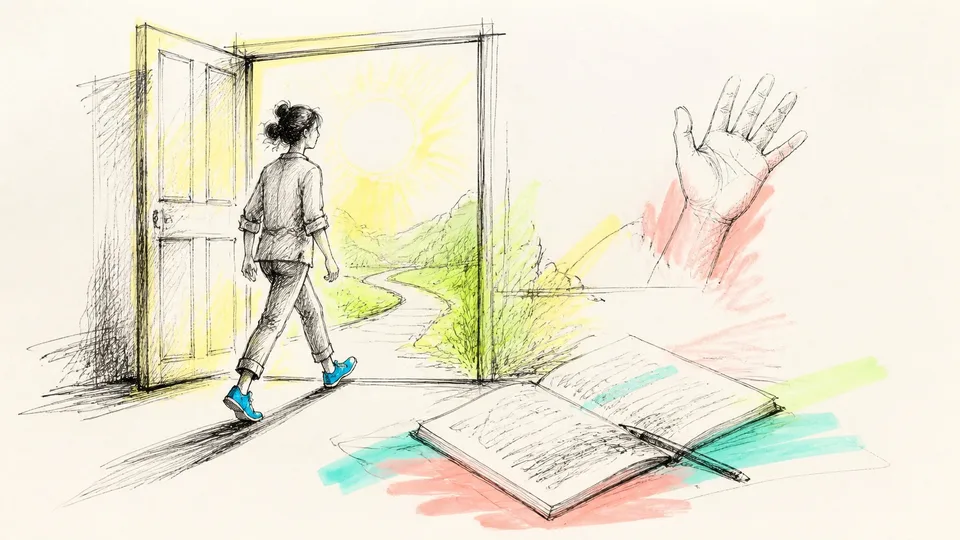
Confidence is not the absence of doubt. It can be the willingness to speak while your voice shakes, try again after a mistake, or enter a room without shrinking to make everyone else comfortable.
These poems about confidence include two sonnets, a haiku, blank verse, and a villanelle. They are for students, speakers, artists, friends, and anyone learning to trust the knowledge that practice has quietly built.
I have seen confidence grow in small moments. A child raises a hand, a writer keeps a page, or a person says what they need without turning the truth into an apology. You may also enjoy these poems about self love and these poems about strength.
Poems About Confidence
The Voice That Shook
This Shakespearean sonnet uses an ABAB CDCD EFEF GG rhyme pattern. The speaker's voice is still nervous, but the poem treats speaking honestly as confidence rather than waiting to feel fearless.
The voice that shook still found its way to rise,
It crossed the room and reached the waiting chair,
A question opened in another's eyes,
And made a little courage in the air.I used to think that confidence was steel,
A polished answer no one could refuse,
But now I know the brave can stop and feel,
Then choose the words they honestly can use.The voice may tremble, pause, or lose its place,
The truth can still be carried in its sound,
A person does not need a perfect face
To stand upon the newly spoken ground.The voice that shook has learned its own clear part,
A quiet bell made steady by the heart.
First Step in Blue Shoes
This haiku keeps confidence close to a first step. Its five, seven, five syllable pattern makes the act small enough to attempt.
Blue shoes meet the floor
One brave step opens the door
Morning sees me stand
The Practice of Believing
This second sonnet uses an ABBA ABBA octave and a six line resolution. It presents confidence as accumulated practice rather than an inherited personality.
The practice of believing starts with less,
One line revised, one question asked aloud,
One hand that rises through a waiting crowd,
One honest answer spoken without dress.
No single day can promise full success,
The road is made of trying, not of proud
Declarations written for the crowd,
But small returns that make the shoulders less.
I keep the proof of every time I tried,
The rough first page, the door I entered late,
The moment I stood up and stayed inside
My own clear name instead of borrowed fate.
Belief grows roots through ordinary art,
A steady practice living in the heart.
The Rooster Who Took a Bow
This blank verse poem follows a rooster who mistakes a morning call for a stage performance. Its unrhymed lines keep the humor gentle while confidence learns humility.
The rooster stood upon the garden gate.
He cleared his throat and called the morning up.
A sparrow blinked and carried on with seed.
The rooster bowed as if the crowd had cheered.
One hen looked over from the nesting straw.
He tried again, a little less severe.
The second call was warmer, not as loud.
The yard grew bright, and no one needed praise.
He stepped down from the gate and found the grain.
Sometimes a voice grows strong by letting go.
Let the Small Voice Begin
This villanelle uses nineteen lines, two repeating refrains, and two rhyming sounds. The refrains encourage a person to begin before certainty arrives and to return after a difficult attempt.
Let the small voice begin before it knows.
The door is wide enough for one clear word.
A steady heart can grow where no one goes.
The page may shake, the careful sentence slow,
The room may hold a silence hard and blurred.
Let the small voice begin before it knows.
A hand can rise, a quiet answer show,
A person can be heard without a sword.
A steady heart can grow where no one goes.
The first attempt may falter as it flows,
Yet every try makes something less absurd.
Let the small voice begin before it knows.
No trumpet tells us when the courage grows,
It gathers in the choices we record.
A steady heart can grow where no one goes.
I speak one word, then let the silence close,
The next word waits, but I have crossed the ford.
Let the small voice begin before it knows.
A steady heart can grow where no one goes.
Confidence That Leaves Room
Confidence should not require a person to become loud, certain, or careless. It can be a quiet trust in one's preparation, a willingness to ask for help, and the ability to keep learning after a mistake.
Use The Voice That Shook for a speech, presentation, or difficult conversation. First Step in Blue Shoes is a small encouragement, while The Practice of Believing suits a student or artist. The rooster poem brings humor, and the villanelle can accompany a journal about trying again.
If you share one of these poems, name the action that took courage. Mention the hand raised, page kept, door entered, or sentence spoken. Specific effort is more helpful than a general command to be confident.
You do not have to wait until doubt disappears. Carry it gently, take the next step, and let practice teach your heart what it can do. Confidence often arrives after the beginning, not before it.
Send a little poetry to someone you love.