

A son changes while a parent is still learning how to see him. The child who once filled a pocket with stones may grow into a man carrying responsibilities no one else can fully measure. Love has to grow too. It must keep its tenderness while making room for independence, difference, and a life that belongs to him.
These poems about sons are written for parents, grandparents, guardians, and family members who want words for pride, memory, encouragement, and steady affection. The collection includes two sonnets, a ballad, a haiku, and blank verse. The poems move from childhood curiosity to shared adult work without claiming that every son follows the same path.
Family love is not a script for who a boy or man must become. The most generous hope is that he will grow into his own honest character, learn from mistakes, practice kindness, and know he has a place where he can speak truth. A poem can bless that becoming without trying to control it.
For a wider view of kinship, these poems about family celebrate the many people who shape a home. The poems for a first born son offer a more specific choice for birthday memories and the first experience of parenthood.
Five Poems for Sons at Every Age
Pockets Full of Questions
This sonnet remembers a curious child who brings the outdoors home in his pockets. The poem values questions more than quick answers and treats wonder as a strength worth protecting.
Sonnet
He brought three stones and one curled leaf inside,
Then asked why creek beds never lose their song;
He set his muddy treasures side by side,
And waited for a truth both clear and strong.
I knew the names of neither stone nor tree,
Yet sat beside him on the kitchen floor;
We opened books to see what we could see,
Then found one question always leading more.
A parent cannot answer every why,
Or map each turning road a son may choose;
We teach him how to look beneath the sky,
And how to keep his wonder when we lose.
The stones still rest inside a wooden bowl,
Small weights of wonder gathered by his soul.
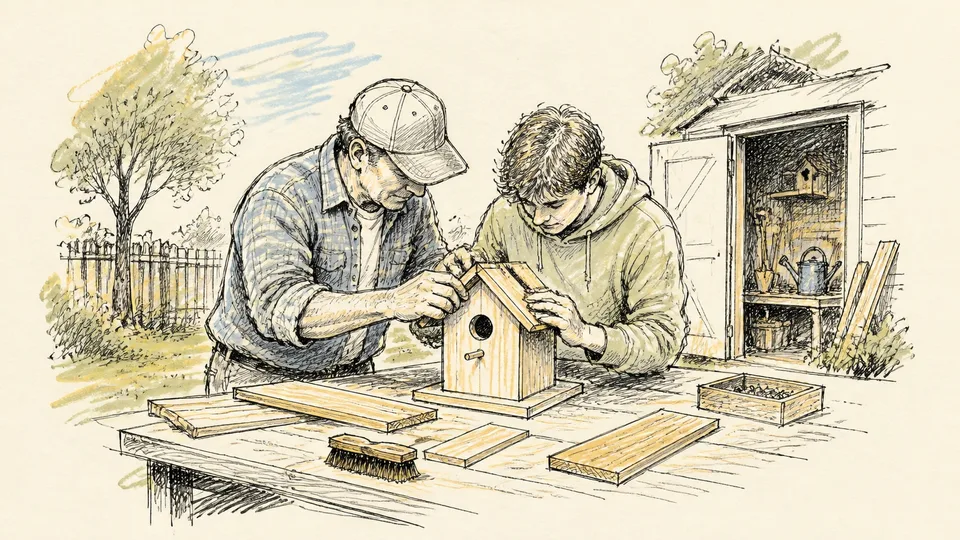
Building the Birdhouse
Shared work can create a kind of conversation that words alone do not reach. This sonnet follows a parent and grown son making something useful together while both give and receive instruction.
Sonnet
We measure cedar twice beneath the sun,
Then mark the line and set the square in place;
You say my old remembered way is done,
And show a safer method with good grace.
I hold the board while you begin to drill,
You steady me when stiff hands miss the mark;
The workbench fills with sawdust, warm and still,
A small roof rises ready for the lark.
I once showed you how tools should meet the grain,
Today your patient teaching carries through;
Love is not keeping every role the same,
It makes a larger room for what is new.
We hang the house where morning branches stir,
Both teacher and both student as we were.
The Long Road Home
This ballad tells of a son returning after making his own way. The welcome does not ask him to become a child again, only to bring his present self to the familiar table.
Ballad
His headlights crossed the garden gate,
The supper clock struck eight;
We heard the gravel tell us all,
He had not lost the way.He carried stories from the road,
And lines beside his eyes;
We set another plate for him,
Beneath familiar skies.He was no boy returned unchanged,
Nor did we ask him so;
We welcomed who had come through rain,
And all he chose to show.
Shoes by the Door
This haiku catches the evidence of a son who has come home for a visit. The quiet image holds both his independence and the comfort of his return.
Haiku
His shoes by the door
Rain settles into silence
One more plate is set
Blessing Without a Map
This blank verse poem offers encouragement without prescribing a single future. It honors the difficult parental task of remaining available while allowing a son to choose his own direction.
Blank verse
I cannot draw the map your life will need.
The roads I knew have altered with the years.
I give you what I can, an open door,
A name for kindness, courage to repair.
May you ask help before the weight grows hard.
May laughter keep a window in your work.
May you make room for people unlike you.
May rest be counted worthy of your time.
Go choose the road that lets your gifts serve well.
My love will bless the journey, not command.
Loving a Son Without Holding Too Tightly
A poem for a son can celebrate where he has been while respecting where he is going. If he is young, name the curiosity, humor, or kindness you already see. If he is grown, speak to the person he is now rather than only remembering the child he was. Both versions belong to the family story.
“Pockets Full of Questions” fits a keepsake for a curious child or a parent remembering early years. “Building the Birdhouse” can honor a grown relationship where knowledge now travels in both directions. “Blessing Without a Map” suits a graduation, move, new job, or any season when love must offer courage without control.
Add one true detail when you share a poem. Mention the project you finished together, the question that made you laugh, or the quality you have watched him practice. Specific praise shows a son that he is known rather than measured against a general idea of who sons should be.
The work of loving a son changes, but it does not disappear. Sometimes it means guidance. Sometimes it means listening. Sometimes it means trusting the lessons already given and keeping a chair available for honest conversation. Love can be proud and spacious at once, close enough to welcome him home and wise enough to let him grow.
Send a little poetry to someone you love.