

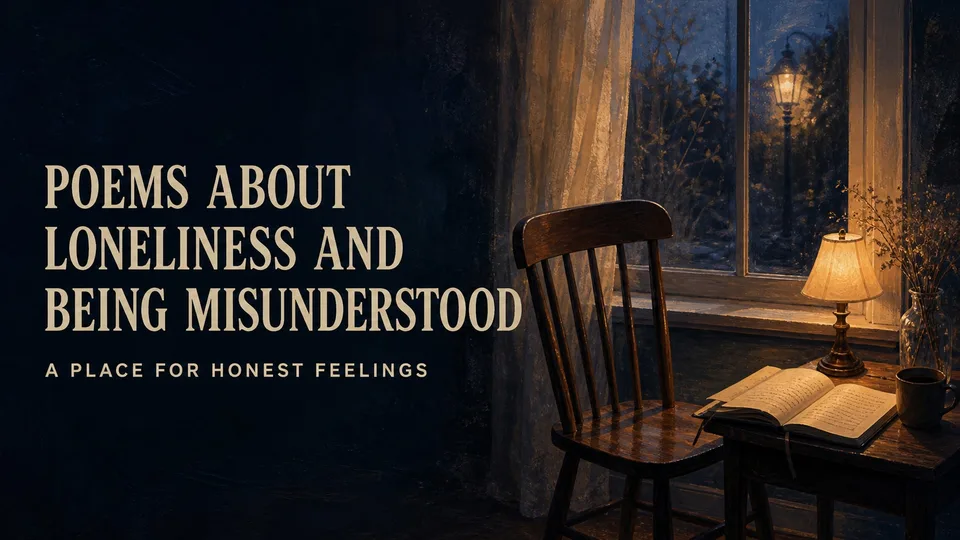
Loneliness is not always an empty room. Sometimes it is the feeling of speaking and not being heard, standing among people and still feeling separate, or carrying a truth that no one seems ready to understand. These poems make room for those feelings without turning them into a permanent identity.
If this topic touches something immediate or overwhelming, consider reaching out to a trusted person or a qualified mental health professional. A poem can offer language and companionship, but it is not a substitute for support. You may also find a gentler companion in poems about overcoming anxiety and finding peace.
Poems About Loneliness and Being Misunderstood
The Unanswered Room
This poem describes the loneliness of words that seem to fall without landing. It does not blame the speaker or the listener. It simply notices the ache of wanting understanding and not finding it yet.
I spoke into the waiting room,
My words became the air.
They crossed the space, then settled down,
Unanswered anywhere.I held the meaning in my hands,
I tried to make it clear.
The room was not entirely empty,
Yet no one seemed to hear.
A Chair at the Edge
Being present at the edge of a group can feel more painful than being alone by choice. This poem uses a chair as a quiet witness to that experience. It also leaves room for the possibility that another seat may be found.
I kept a chair at the edge of things,
Near laughter, near the door.
I watched the bright conversation move,
Then watched it move some more.Perhaps tomorrow someone will ask
What brought me to this place.
Perhaps I will have strength enough
To answer face to face.
The Name I Know
Misunderstanding can make a person question their own story. This poem returns to the stable knowledge of the self without claiming that every answer is easy. It is a small act of self recognition.
They named me by a passing thought,
A shape they thought they knew.
I carried home the heavier words,
Then found they were not true.I know the name my heart responds,
The work my hands have done.
A person is not made of every
Judgment from the sun.
Between Two Languages
Sometimes people use the same words but mean different things. This poem treats misunderstanding as a gap that can be crossed with patience, not as proof that either person is beyond care. The tone is searching and open.
We spoke the same familiar words,
Yet heard a different tune.
Your meaning rose like morning light,
Mine arrived too soon.Between us lay a river wide,
With no clear bridge in sight.
Still, someone placed a lantern there,
And kept it through the night.
The Porch Light
The porch light is a hopeful image because it does not demand that someone arrive quickly. It simply says there is a place where welcome remains possible. This poem is for a reader who needs a small sign of belonging.
I left one light beside the door,
Not bright enough to call.
It only said, There is a place,
If you should need it all.The night was long, the road was dark,
The waiting did not end.
Yet somewhere past the quiet fields,
A light can meet a friend.
A Voice Beneath the Noise
Loneliness can make a person’s own voice hard to hear. These lines encourage a return to quiet attention, writing, or honest conversation. The poem does not promise instant belonging, only a beginning.
Beneath the noise, beneath the names,
Beneath the hurried crowd,
A smaller voice was waiting still,
Too tender to be loud.I sat beside it, listened close,
And let the silence stay.
The voice was mine, and knowing that
Became a kind of day.
Someone May Understand
This closing poem offers hope without pretending every person will understand every part of us. It is enough to imagine one patient listener and to remain open to being found. The ending is meant to feel steady rather than sentimental.
Someone may understand you yet,
Not every word, but some.
A patient heart may hear the place
Your truest meanings come.Until that hour, keep one small truth,
Keep one warm light in view.
The world is wider than this day,
And there are hearts for you.
You deserve to be heard with patience and respect. Let these poems name what hurts, then consider one small next step toward connection, whether that is a message, a walk, a journal page, or a conversation with someone trained to help.
Send a little poetry to someone you love.