
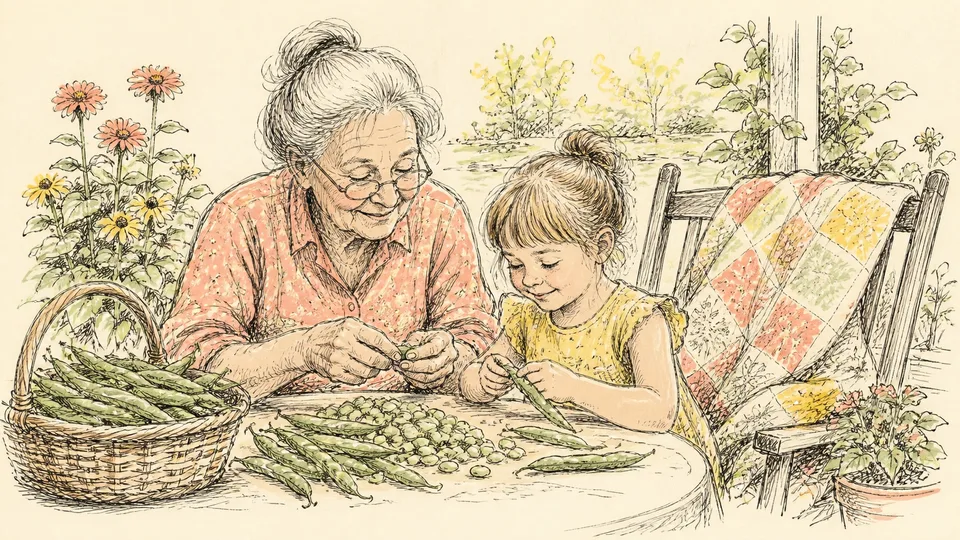
A grandmother can make an ordinary task feel like family history. Shelling beans, folding towels, turning a page, or watching rain from the porch may become a memory a grandchild carries for decades. The activity matters, but the deeper gift is unhurried attention: the sense that there is time for one more question and one more story.
These poems about Grandma are for birthdays, visits, memory books, family gatherings, and simple notes of gratitude. The collection includes two sonnets, a villanelle, a haiku, and free verse. The poems honor warmth and wisdom without pretending every grandmother is the same. Some are lively storytellers, some are quiet listeners, and many are a changing mixture of both.
Grandmothers also deserve to be seen as whole people rather than only as family roles. They have their own interests, work, friendships, hopes, and need for rest. A loving poem can celebrate what she gives while remaining curious about who she is and what she still wants to share.
When illness makes a short message useful, these get well poems for Grandma offer gentle companionship. The prayers for elderly loved ones provide a faith centered option for families who want words of blessing and care.
Five Poems for Grandma and the Memories She Makes
Beans on the Porch
This sonnet grows from a small shared chore. The bowl between grandmother and grandchild becomes a place for stories, questions, and the kind of teaching that never feels like a lesson.
Sonnet
The bean pods made a basket by her chair,
She split each seam and dropped the green pearls through;
I copied every motion seated there,
Then asked the thousand things a child will do.
She told me which small bird had crossed the fence,
And how to judge when summer rain was near;
Her answers carried patience more than sense,
For every question found a welcome ear.
The metal bowl grew bright beneath our hands,
The afternoon leaned golden on the floor;
I learned that love need not make grand commands,
It makes a little time, then makes some more.
Long after gardens sleep beneath the snow,
I hear those beans fall softly in the bowl.
The Quilt Across Her Chair
A handmade quilt can hold many seasons of family life. This sonnet honors the repairs, saved pieces, and patient work that turn useful cloth into a record of care.
Sonnet
The quilt lay folded on her wooden chair,
Its coral squares beside a faded green;
One patch had come from something she would wear,
Another held a dress I had not seen.
She showed the place where hurried stitches crossed,
And laughed because no corner met quite right;
“A useful thing need not count flaws as loss,”
She said, then spread the colors in the light.
That quilt has warmed a dozen winter knees,
And made a tent above a reading child;
It carries work, repair, and memories,
In every seam both practical and wild.
I wrap it close when evening enters through,
And feel her patient hands make old cloth new.
Grandma Keeps the Kettle Near
This villanelle uses the kettle as a sign of welcome. The repeated lines echo the comfort of a familiar visit where conversation can unfold at its own pace.
Villanelle
Grandma keeps the kettle near the flame,
A cup is waiting by the window clear;
She gives each wandering story room to name.We bring our news, our triumph, and our shame,
She listens till the truest words appear;
Grandma keeps the kettle near the flame.The rain taps out a soft and steady game,
While cinnamon and black tea warm the air;
She gives each wandering story room to name.She never says that every hurt is tame,
Or sends a worried heart away from here;
Grandma keeps the kettle near the flame.A laugh can turn a heavy thought less grave,
A hand can make the next small action clear;
She gives each wandering story room to name.We leave with lighter steps than when we came,
And carry home the welcome gathered here;
Grandma keeps the kettle near the flame,
She gives each wandering story room to name.
Porch Story
This haiku listens to a grandmother telling a story at dusk. The rocking chair and summer insects keep the rhythm around her voice.
Haiku
Grandma tells one tale
Crickets gather near the steps
Her chair keeps the beat
What She Asks Me Now
This free verse poem turns attention toward Grandma’s present life. Love is not only receiving old stories, but asking new questions and listening for what matters to her today.
Free verse
She asks me to stay after supper,
not for another story of long ago,
but to see the tomatoes she planted,
the puzzle half finished by the lamp,
the red bird that visits at four.
I put my phone inside my pocket.
She opens the screen door.
We step into the life she is living now.
Giving Grandma the Gift of Attention
When you choose a poem for Grandma, think about the version of her you actually know. She may prefer a funny memory to a formal tribute. She may love gardening, music, puzzles, travel, church, sports, books, or a quiet cup of tea. Let the message reflect her interests instead of relying only on familiar grandmother images.
“Beans on the Porch” fits a memory book or family gathering where shared work shaped the bond. “The Quilt Across Her Chair” honors making, mending, and practical creativity. “What She Asks Me Now” is a useful reminder for anyone who wants to know a grandmother as she is today, not only as she appears in childhood memory.
Add a detail only your family would recognize. Name the card game she taught, the flower she waits for each spring, or the saying that still brings a laugh. If you do not know enough of her story, let the poem become an invitation. Ask what she loved at your age, what she is learning now, or which ordinary day she would gladly live again.
Grandmothers give many kinds of gifts, but attention can be returned. Sit beside her. Help with the task in front of her. Listen without rushing toward the next obligation. The story you hear may become precious later, yet the greater gift is the present hour itself: two lives meeting around a table with enough time to be known.
Send a little poetry to someone you love.