

Sometimes the thing that brings tears is not a goodbye. It is remembering who stayed until you could finish a sentence, or who brought something to eat without expecting you to explain yourself. If you are looking for friend poems that make you cry, you may be trying to thank someone for a kindness that still feels larger than your words.
These five poems make room for that feeling through gratitude, a move far away, familiar objects, and the relief of meeting again. Two sonnets give the longer thoughts a measured shape. A repeating poem, a brief haiku, and a poem in free verse offer other ways to approach what can be difficult to say directly.
I am most moved by friendship when it appears in an ordinary detail. A wet coat beside the door tells me more than a grand promise sometimes can. Someone has come through the weather. Someone has decided that being with you matters more than arriving dry.
You might choose a poem for a letter, send one to a friend you miss, or read quietly with a particular person in mind. There is no need to make yourself cry, and no need to turn every tender feeling into a message. Sometimes recognizing what a friendship has given you is enough for one sitting.
Five Tender Friend Poems for Gratitude and Missing Someone
The Coat Beside the Door
The dripping coat is the detail I keep returning to because it shows the friend arriving before any helpful words are found. I value the way the speaker is allowed to be quiet, with bread and company taking the place of an explanation. This is a poem to share with someone whose presence helped more than they may know.
You came before the rain had left the pane
And set your dripping coat beside the door.
I tried to find a way to name the pain;
You did not ask what I was waiting for.You pulled the other chair beside my chair
And warmed your hands around a cup of tea.
The clock went on; you let the hush be there.
You did not make a better self of me.We broke the bread. There seemed no need to say
The things I thought a grateful friend should say.
You brushed the little crumbs of crust away
And asked if you could stay till close of day.I had no words to tell you what I knew:
The room was less alone because of you.
The Cup That Stayed
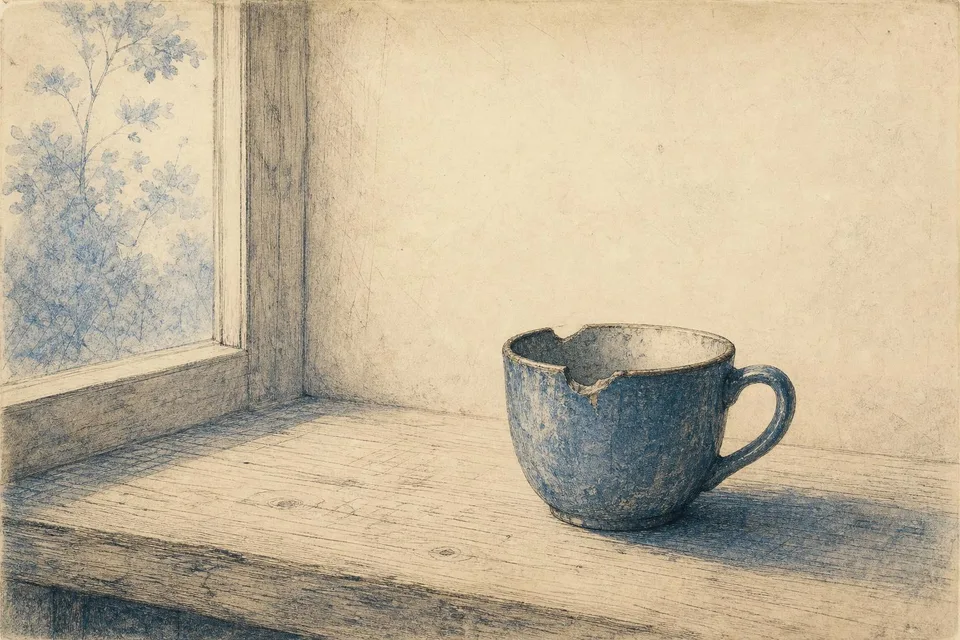
An ordinary cup can become surprisingly difficult to put in a different cupboard. I like the speaker rinsing and using it rather than treating it as something too precious to touch. The returning lines feel right to me for missing a friend, because that feeling often comes back while we are doing something else.
I keep your blue cup where it used to stay.
The kettle clicks; I glance toward the door.
The distance cannot wash our years away.Your moving boxes left on Saturday;
A square of sun lay empty on the floor.
I keep your blue cup where it used to stay.There always seems to be some small display
Of weather you would like, or news, or more.
The distance cannot wash our years away.I rinse the cup and watch the bubbles play;
My thumb finds where the glaze was chipped before.
I keep your blue cup where it used to stay.Your letter tells of trees across the bay
A narrow path, a friendly corner store.
The distance cannot wash our years away.I write about the rain we had today
Then put the kettle on to boil once more.
I keep your blue cup where it used to stay.
The distance cannot wash our years away.
After All Those Years
The untouched tea makes this reunion feel especially tender to me. I imagine the friends having so much to take in that neither remembers to lift a cup. Its few words could sit inside a card after a long awaited visit.
Your laugh fills the room.
Our tea cools between our hands.
Years slip from my sleeve.
Before You Turn the Key
I notice the pale square where the picture hung before I notice the packed boxes. That small absence gives the leaving somewhere to settle. What I appreciate most is the turn toward ordinary conversation at the end, when the friends discover something they can still share.
I stand beside the boxes on your floor
And watch you lift a picture toward the light.
The wall behind it leaves a square of white;
Your footsteps make an echo by the door.We thought that we would have one evening more
To sit until the streetlamps warmed the night.
Now all the cups are wrapped and out of sight;
We leave the key where others have before.I almost ask for promises to keep
The days from changing all the things we know
As though our years could fit inside your case.
Instead, I ask how well you think you’ll sleep
And if the trees outside your window grow.
You turn to tell me; there’s your eager face.
What I Meant to Thank You For
The corrected shopping list stays with me because the friend listens closely enough to notice something almost too small to mention. I find the speaker’s late understanding more moving than a perfect thank you delivered on time. This poem may suit a friend who has never thought of their everyday attention as a gift.
I thanked you for the ride.
That was the easy part to name:
your car at the curb
the seat you had cleared
of books and a folded umbrella.What I meant was
thank you for not turning on the radio
when I began to talk.Thank you for remembering
the thing I said halfway home
then asking about it
the following week.And once
when I read you my shopping list
because I had forgotten
what I was looking for
you said
You already have the apples.You had been listening
even then.I am only now finding words
for how that felt.
Finding the Words for Your Particular Friend
The kindnesses in these poems are modest enough to be overlooked while they are happening. A chair is pulled closer. A question is remembered. Someone tells us about the trees outside a new window. Later, those details can become the clearest evidence that we were known and cared for.
If you want to send one of these poems, choose the situation that comes closest to your friendship. The first speaks to quiet support, while the blue cup and the packed room belong to friends living farther apart. The haiku leaves room for the joy of reunion. The final poem offers a thank you that has taken time to understand.
A brief personal note can help a poem reach its intended person. Name one true detail of your own: the afternoon they came over, the question they remembered, or the conversation you still carry. You do not have to match the poem’s language. Your ordinary words may be exactly what makes the gift feel personal.
And if you are reading without sending anything, you can leave the page here for now. Missing someone does not always ask for an immediate task. I like to think there is value in noticing a friendship carefully, even before we know what to do with the feeling. Perhaps tomorrow you will make the call. Today, you have remembered why their voice matters.
For another collection, visit Comfort Poems for a Friend: Company for an Unfinished Day or Poems About the Comfort of Lifelong Friendship.
Send a little poetry to someone you love.